
CPAP and Dry Mouth: Protecting Comfort and Oral Health
Continuous Positive Airway Pressure (CPAP) is a first-line treatment for obstructive sleep apnoea (OSA), but dry mouth, or xerostomia, is a commonly reported side effect. Studies have shown that up to 40% of CPAP users reported dry mouth after commencing CPAP therapy.(1)
A recent scoping review similarly found xerostomia was commonly reported with CPAP.(2)
For dental professionals, this matters. Persistent oral dryness can affect oral health and make CPAP less comfortable.
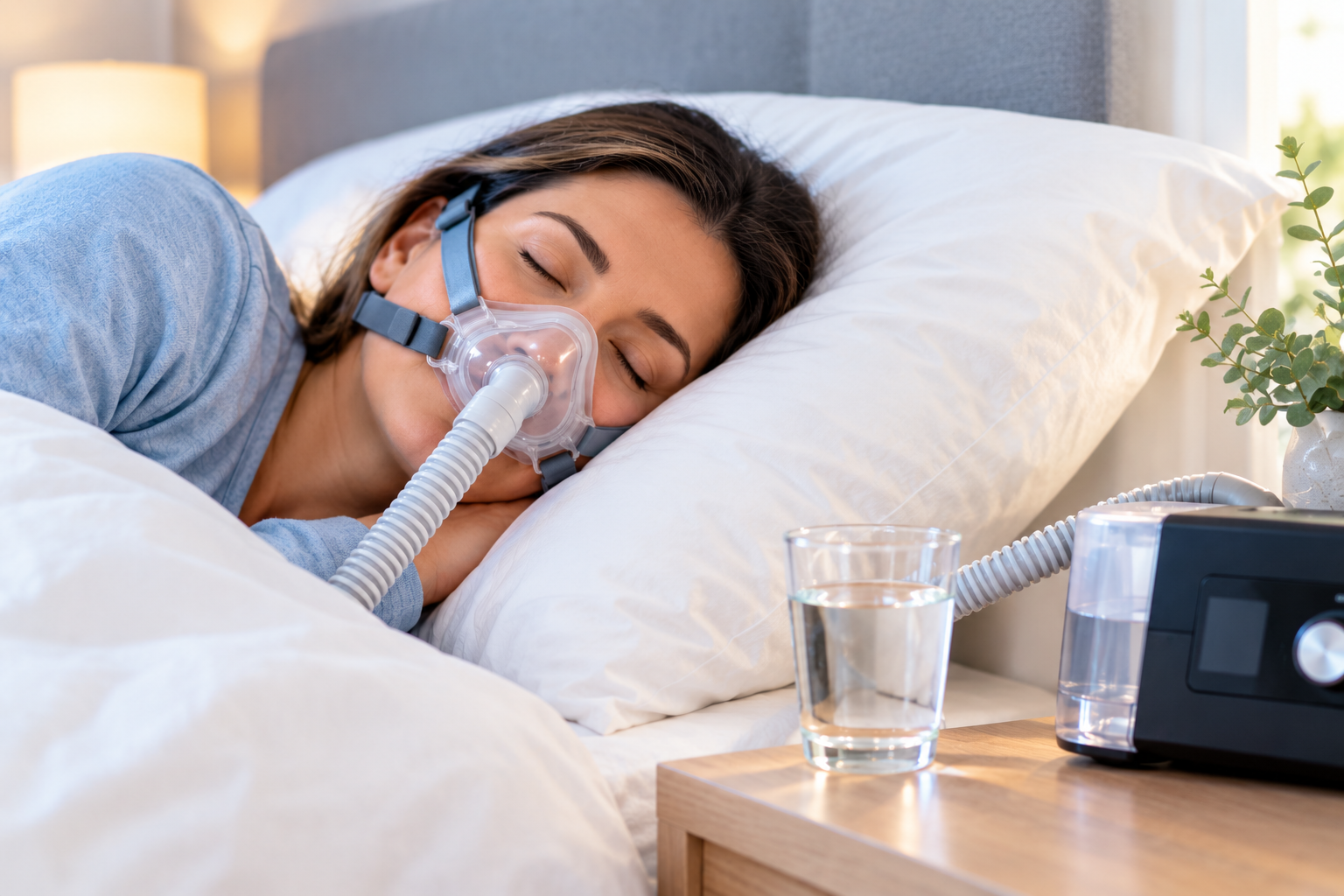 In a study of 1,484 long-term CPAP users, patient-reported dry mouth was independently associated with CPAP non-adherence(3)
Why does CPAP cause dry mouth?
Several factors may contribute. Mouth breathing and mouth leakage can increase evaporation from oral tissues, while mask leakage, nasal obstruction and inadequate humidification can further contribute to dryness. Increased intraoral pressure during CPAP has also been proposed as a mechanism that may interfere with normal salivary secretion.(4)
Importantly, OSA itself is associated with xerostomia, so dry mouth in a CPAP user should not automatically be attributed solely to the device.(2)
Why does dry mouth matter?
Saliva does far more than lubricate the mouth. It protects oral tissues, buffers acids, contributes to antimicrobial defence and provides calcium and phosphate that help maintain the balance between enamel demineralisation and remineralisation.(5)
When salivary protection is compromised, patients may experience oral discomfort, difficulty speaking or swallowing, halitosis and increased susceptibility to oral disease such as candidiasis(5)
Managing CPAP-associated dryness should therefore begin by identifying contributing factors. Persistent mask leakage, mouth breathing, nasal obstruction and humidification should be reviewed with the patient’s sleep healthcare provider. It is also important to consider the patient’s overall oral health, caries risk, periodontal status, diet and oral hygiene
Improving comfort with GC Dry Mouth Gel
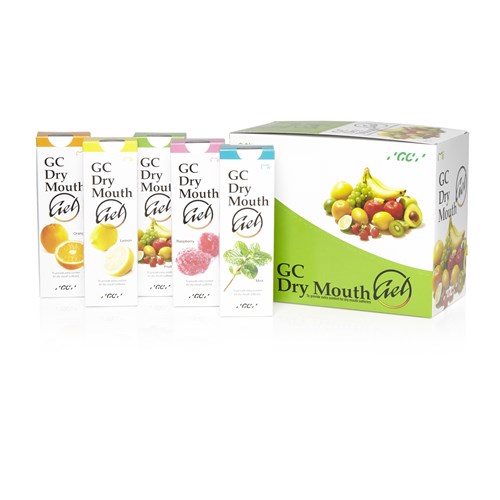
GC Dry Mouth Gel is a near-neutral pH gel designed to moisturise and lubricate oral tissues, providing relief from dry mouth symptoms for up to four hours per application.(8) It is available in five mild flavours (Mild mint, Raspberry, Fruit Salad, Lemon and Orange) providing patients with a choice of taste.
A 2026 randomised, double-blind crossover trial involving 37 patients with xerostomia found that GC Dry Mouth Gel significantly increased oral wetness immediately after application. Following repeated use, xerostomia scores and clinical oral dryness scores also improved.(7)
GC Dry Mouth gel can be used during the day and at night as required by applying the gel to the tongue, oral mucosa and teeth.(8)
Supporting enamel with GC Tooth Mousse™ and GC Tooth Mousse™ Plus
While Dry Mouth Gel focuses on oral comfort and lubrication, reduced salivary protection also has implications for enamel mineral balance.
GC Tooth Mousse™ (fluoride-free) and GC Tooth Mousse™ Plus (900 ppm fluoride) both contain 10% RECALDENT™ (CPP-ACP), casein phosphopeptide-amorphous calcium phosphate, providing bioavailable calcium and phosphate to the oral environment.
A 2025 systematic review concluded that RECALDENT™ (CPP-ACP) is effective in promoting remineralisation of early white spot lesions, with evidence suggesting enhanced remineralisation when CPP-ACP is combined with fluoride.(9)
For patients with xerostomia or altered salivary flow, GC Tooth Mousse and GC Tooth Mousse Plus can therefore be considered as effective adjuncts to a fluoride-based preventive strategy, rather than replacements for fluoride toothpaste.
GC Tooth Mousse is available in 7 flavours (Mint, Vanilla, Strawberry, Melon, Tutti Frutti, Milkshake and Chocolate) whilst GC Tooth Mousse Plus is available in 3 flavours (Mint, Strawberry and Vanilla).
A simple bedtime strategy
Managing CPAP-associated dryness should therefore begin by identifying and addressing contributing factors, while topical approaches can be used to provide symptomatic relief when dryness persists.(6)
For CPAP users experiencing dry mouth:
1. Brush with fluoride toothpaste.
2. Apply GC Tooth Mousse or GC Tooth Mousse Plus after brushing as directed
3. Apply GC Dry Mouth Gel to dry oral tissues and as needed during the day or night
4. Encourage review of persistent mask leakage, mouth breathing or inadequate humidification with the patient’s sleep healthcare provider.
Addressing both oral comfort and mineral protection gives dental professionals a practical way to support the oral health of patients using CPAP.
By recognising CPAP-related dry mouth and addressing both comfort and oral disease risk, dental professionals can play an important role in supporting oral health while helping patients continue an important medical therapy.
Shop GC Dry Mouth Gel online
Shop GC Tooth Mousse and GC Tooth Mousse Plus online

References
1. Tsuda H, Moritsuchi Y, Higuchi Y, Tsuda T. Oral health under use of continuous positive airway pressure and interest in alternative therapy in patients with obstructive sleep apnoea: a questionnaire-based survey. Gerodontology. 2016;33(3):416-420. doi:10.1111/ger.12184.
2. Raoof M, Verhoeff MC, Kooshki R, Aarab G, Lobbezoo F. Self-reported oral moistening disorders in obstructive sleep apnoea: a scoping review. J Oral Rehabil. 2024;51(1):226-239. doi:10.1111/joor.13532.
3. Rotty MC, Suehs CM, Mallet JP, et al. Mask side-effects in long-term CPAP-patients impact adherence and sleepiness: the InterfaceVent real-life study. Respir Res. 2021;22:17.
4. Bortolotti M. The cause of dry mouth during CPAP application. J Clin Sleep Med. 2017;13(4):647. doi:10.5664/jcsm.6568.
5. Dawes C, Pedersen AML, Villa A, et al. The functions of human saliva: a review sponsored by the World Workshop on Oral Medicine VI. Arch Oral Biol. 2015;60(6):863-874. doi:10.1016/j.archoralbio.2015.03.004.
6. Conte DB, Marquezzan ME, Schneider LR, et al. Systematic Reviews on the Management of Xerostomia and Hyposalivation: An Umbrella Review. Gerodontology. 2025;42(2):165-176. doi:10.1111/ger.12809.
7. Thanakun S, Kajornwongwattana W, Wattanaurai B, et al. Comparable Effectiveness of Novel and Commercial Saliva Substitute Gels in Dental Patients Experiencing Xerostomia: A Randomized, Double-Blind Crossover Trial. Gels. 2026;12(1):61. doi:10.3390/gels12010061.
8. GC Australasia. GC Dry Mouth Gel Instructions for Use.
9. Baccolini V, Pereira da Silva L, Teixeira L, Teixeira de Sousa R, Manarte-Monteiro P. The Role of Casein Phosphopeptide-Amorphous Calcium Phosphate (CPP-ACP) in White Spot Lesion Remineralization: A Systematic Review. J Funct Biomater. 2025;16(8):272. doi:10.3390/jfb16080272.
ALWAYS READ THE LABEL AND FOLLOW THE DIRECTIONS FOR USE
RECALDENT and RECALDENT logo are trademarks of Mondelēz International group used under license