Interview with Dr. Dana Adyani-Fard, Germany
How do you currently diagnose Molar Incisor Hypomineralisation (MIH) in your practice? What are typical features of MIH?
Dr. Adyani-Fard: Currently, the diagnosis is made first clinically and by questioning for symptoms. Typical features are opacities with and without enamel defects, post-eruptive enamel breakdown and hypersensitivity.
What do you attach great importance to and what is important to consider in MIH therapy?
Dr. Adyani-Fard: Primary therapeutic goals are the pain control, the mitigation of hypersensitivity to cold and defect stabilisation in case of tooth substance loss in the enameldentine area.
Which forms of therapy do you currently use and which ones are successful?
Dr. Adyani-Fard: In practice, the pain is currently controlled by sealing with glass ionomer and a combined chairside application of high-dose CPP-ACP and fluoride preparations. For home use, the patient receives CPP-ACP and fluoride-based remineralisation pastes.
How often does MIH occur?
Dr. Adyani-Fard: The prevalence is increasing. About 24% of primary school children in Germany are affected. We also see an increased prevalence in our practice.
How often do you recall the patients (and their parents)?
Dr. Adyani-Fard: Following the initial therapy, a follow-up check will be carried out, approximately 4 weeks after the initial presentation. Subsequently, controls are carried out as part of individual prophylaxis if there are no complaints or tooth breakdown.
Which recommendations do you have for your colleagues?
Dr. Adyani-Fard: It is advisable to start with remineralising preparations at an early stage, to seal them and not to treat lesions in the initial phase with composite. Glass ionomers help to control hypersensitivity quickly and efficiently.
How do you explain MIH to the parents?
Dr. Adyani-Fard: MIH is a systemic qualitative defect of the enamel. The etiology of this disease is not yet clear, and numerous pre-and postnatal influences are discussed. Evidence based data and studies are not yet sufficiently available.
In your practice, what are the key elements for successful treatment of MIH and where do you see the limits?
Dr. Adyani-Fard: The focus is on the pain control of hypersensitivity by means of remineralising preparations and glass ionomer based sealants and a close monitoring of the defects. Important is the attempt of tooth preservation by early start of treatment to avoid extraction therapy.

Author: Dr. Dana Adyani-Fard graduated as a dentist at the Johann Wolfgang GoetheUniversität in Frankfurt
am Main (Germany) in 2006.
She has worked in several practices and has her own private practice since 2015. She is currently working
as a consultant for several dental companies.
Useful products
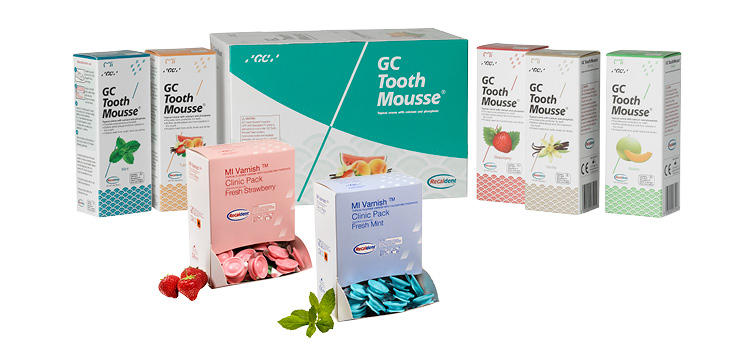
Tooth Mousse MI Varnish