
An interview with Ms. Tatiana Brandt, MEd, RDH, Denmark
Menopause comes with a long list of symptoms most people can recite by heart – hot flashes, night sweats, mood swings. But there’s another change that often slips under the radar, even though it affects daily comfort, oral health, and overall wellbeing. Dry mouth, a surprisingly common yet rarely discussed symptom, can quietly reshape how women experience this stage of life. We spoke with dental hygienist and clinical lector Tatiana Brandt to understand the connection between hormonal changes and xerostomia, and what dental professionals can do to help.
Many women report dry mouth during menopause. Is there truly a link between menopause and xerostomia?
Tatiana Brandt: First, we need to clarify definitions. Many studies define dry mouth or xerostomia using both subjective symptoms and objective salivary flow measurements.1,2 In Scandinavia, we distinguish between xerostomia - the feeling of dryness - and hyposalivation - a measurable reduction in saliva.3 These don’t always correlate. Some women have reduced saliva without the feeling of dryness, and others experience an extreme dry feeling even with borderline normal flow. The composition of saliva in women is related to sex hormones and complex.4
During menopause, the composition of saliva changes. Saliva is 99% water and 1% proteins and enzymes, and this 1% is heavily influenced by sex hormones.5 When estrogen and progesterone decrease, we lose important protective effects on the mucosa, teeth, gingiva, and pulp. The mouth is full of receptors for these hormones6 – and when the hormones disappear, so does the protection. More research is still needed. Women have long been underrepresented in health research because the system was historically built around male bodies, and that legacy still influences funding, study design, and medical training. The good news is that awareness is growing and meaningful progress is being made, even though some gaps still remain.
How common is dry mouth in menopausal women?
Brandt: The conclusions vary depending on the study, and the available research has some limitations. We lack long term follow up research on the same cohort of women. But overall, the numbers range from 30% to 50% of menopausal women reporting xerostomia.7,8
In Denmark, the official number for postmenopausal women is 44%, though numbers vary widely – anywhere from 11% to 72%, depending on how the question is asked.
Do ageing men experience similar symptoms, or is this mainly a women’s issue?
Brandt: Dry mouth is associated with age in both men and women. But women over 60 take more medication than men, and polypharmacy is a major risk factor.9 However, even when comparing men and women not taking medication, women still report more dryness – about 15% more in some studies.10 But again, we lack reliable long term research because women are often excluded from studies due to hormonal fluctuations. Another important point: women perceive symptoms more intensely. Evidence points to sex specific differences in mucosal biology, with women experiencing more marked thinning and fragility as hormone levels change. This may also explain why menopausal women often experience burning mouth syndrome,13 even when other oral diseases have been ruled out.
Are there specific medications used during menopause that increase dry mouth?
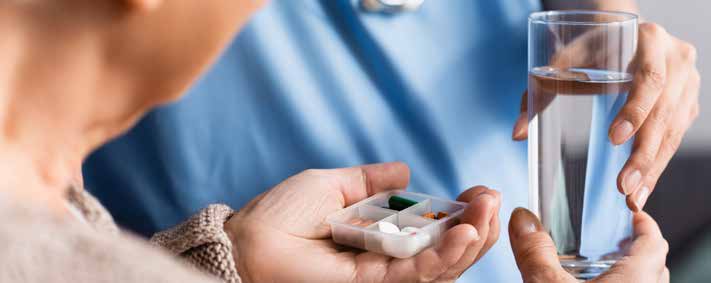
Brandt: There are many. More than 1,000 medications have been reported to cause or contribute to xerostomia.14 Polypharmacy is a strong predicting factor, especially when three or more medications are combined. 9,11,12 Individual reactions vary. One woman may develop severe xerostomia on a certain drug, while another has no symptoms at all. Dose and duration matter too.
Can hormone replacement therapy help reduce dry mouth symptoms?
Brandt: Yes, hormonal therapy – especially bioidentical estradiol and progesterone – can relieve symptoms for many women. But not all. Some women simply don’t respond.15
One unverified hypothesis proposes that menopause associated reductions in mucosal receptor sensitivity may limit the effectiveness of therapy when it’s started too late. Further investigation in this area would be valuable. There is a clear gap in symptom burden and treatment.
Do symptoms improve after menopause, or do they continue?
Brandt: Unfortunately, the symptoms often become more pronounced over time. They tend to appear during perimenopause and become even more common after menopause, according to most studies. Overall, the likelihood of being affected increases with age.
From your clinical experience, how much does dry mouth impact women’s quality of life?
Brandt: A lot. I follow a Danish social media group with 27,000 women aged 40–60, and every day I see posts about burning mouth, sleepless nights, sticky saliva, difficulty swallowing, chronic coughing, loss of taste and smell, biting the cheeks and tongue… It affects eating, speaking, social life, everything. Men rarely complain to the same extent.10 Maybe they don’t experience it as intensely, or maybe they just don’t talk about it. Again, we don’t have comparative studies yet.
What preventive steps can women take before symptoms become severe?
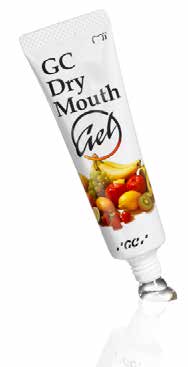
Brandt: There is hope, and lifestyle choices truly make a difference.16 Gentle oral care habits can help protect the mucosa: choosing toothpastes without sodium lauryl sulphate, using non abrasive products, staying well hydrated, reducing smoking and alcohol, eating moisture rich vegetables, and managing reflux all support healthier tissues. Products such as MI Paste Plus or GC Dry Mouth Gel can offer meaningful relief, especially during the night. I tend to favour high viscosity gels rather than sprays because they remain for a longer period. The neutral pH of these products, along with the added calcium and phosphate in MI Paste Plus, is particularly beneficial for women who struggle with acidity and the erosion that can follow. I often explain it this way: we use conditioner and moisturizer on our hair and skin throughout our lives – we need to think about caring for our mucosa with the same consistency and intention. It’s also important to remember that menopause is occurring earlier for many women, with some entering perimenopause in their 30s. When a woman in her 30s suddenly experiences dry mouth, or develops more caries mucosal lesions, it can sometimes be an early sign of hormonal change or perimenopause. Recognizing these shifts early allows women to take preventive steps sooner and maintain comfort and quality of life as their bodies change.

Tatiana Brandt, MEd, RDH, is a registered dental hygienist and experienced educator at the University of Copenhagen’s School of Oral Health Care. With more than 16 years of university level teaching, she has shaped generations of dental hygiene students through health promotion, and evidence based clinical practice. Her work spans curri-culum development, hands on periodontal instrumentation training, and interdiscipli-nary collaboration.
References:
1. Niklander SE, Simms ML, Wiriyakijja P, Santos-Silva AR, Kuten-Shorrer M, Sankar V, Kerr AR, Jensen SB, Riordain RN, Villa A, Delli K. World Workshop on Oral Medicine VIII: Development of a core outcome set for dry mouth: a consensus study. Oral Surg Oral Med Oral Pathol Oral Radiol. 2023 Jun;135(6):885-892.
2. Sen S, Sen S, Dutta A, Abhinandan, Kumar V, Ajit Kumar Singh AK. Oral manifestation and its management in postmenopausal women: an integrated review. Prz Menopauzalny. 2020 Jul;19(2):101-103.
3. Jensen S, Pedersen AM. Hyposalivation og xerostomi. Aktuel Nordisk Odontologi 2019;44(1): 58-74.
4. Mirzaii-Dizgah I, Agha-Hosseini F. Stimulated and unstimulated saliva progesterone in menopausal women with oral dryness feeling. Clin Oral Investig 2011;15(6): 859-862.
5. Cross BW, Ruhl S. Glycan recognition at the saliva - oral microbiome interface. Cell Immunol. 2018 Nov:333:19-33.
6. Cornejo Ulloa PE, Krom BP, Schoonmade LJ, van der Veen MH. Sex steroid hormones: an overlooked yet fundamental factor in oral homeostasis in humans. Front Endocrinol (Lausanne). 2024;15:1400640.
7. Ciesielska A, Kusiak A, Ossowska A, Grzybowska ME. Changes in the oral cavity in menopausal women–A narrative review. Int J Environ Res Public Health. 2022;19:253.
8. Rajpal N, Patel S, Pathak JR, Swain N, Bhor K. Prevalence of oral manifestations in menopausal and postmenopausal women: A systematic review and meta-analysis. J Orofac Sci. 2025;17:40–50.
9. Hafsah S, Syam S. Association of xerostomia and polypharmacy - A case-control study. Community Dent Health 2025;42(4):127-131.
10. Holtkamp A, Beuer F, Wolf TG, Naumann M. Sex-Specific Oral Health: A Narrative Review of Hormonal Influences and Disease Patterns. Dent J (Basel). 2026 Mar 6;14(3):147.
11. Smidt D, Torpet LA, Nauntofte B, Heegaard KM, Pedersen AML. Associations between oral and ocular dryness, labial and whole salivary flow rates, systemic diseases and medications in a sample of older people. Community Dent Oral Epidemiol. 2011; 39.; 276-88.
12. Villa A, Wolff A, Dawes C, Aframian D, Ekström J, Proctor G, McGowan R, Aliko A, Narayana, N, Sia YW, Joshi RK, Jensen SB, Kerr AR, Vissink A, Pedersen AML. Diagnosis, treatment and prevention of medication-induced salivary gland dysfunction (MISGD): a systematic review. Clin Oral Investig. 2015; 19.; 1563-80.
13. Vaidya R. Burning mouth syndrome at menopause: Elusive etiology. J Midlife Health. 2012;3(1):3-4
14. American Academy of Oral Medicine. (Sankar V, Rhodus N et al.). Xerostomia. Retrieved June 4, 2026, from https://www.aaom.com
15. Tarkkila L, Linna M, Tiitinen A, Lindqvist C, Meurman JH. Oral symptoms at menopause –The role of hormone replacement therapy. Oral Surg Oral Med Oral Pathol Oral Radiol Endod. 2001;92:276–80.
16. Ram S, Kumar S, Navazesh M. Management of xerostomia and salivary gland hypofunction. J Calif Dent Assoc. 2011 Sep;39(9):656-9.