page
Categories

Search Results for

Grid List
Filter By

All Results

  • Blog
  • Capsule Waste Evaluation for Restorative Materials: Why EQUIA Forte HT Is a Smart Choice for Minimising Waste in Dentistry

Article

Capsule Waste Evaluation for Restorative Materials: Why EQUIA Forte HT Is a Smart Choice for Minimising Waste in Dentistry

In a 2023 study published by The Dental Advisor, titled Capsule Waste Evaluation for Restorative Materials, offers compelling data supporting the environmental benefits of EQUIA Forte HT. The study evaluated five different capsule-based restorative materials, focusing on packaging efficiency and the amount of usable material delivered per capsule.

The study found that glass ionomer cements (GICs) - the category EQUIA Forte HT falls under - already have the smallest overall Global Warming Potential (GWP) when compared to amalgams and resin-based composites. However, EQUIA Forte HT goes a step further with a packaging design that is uniquely efficient.
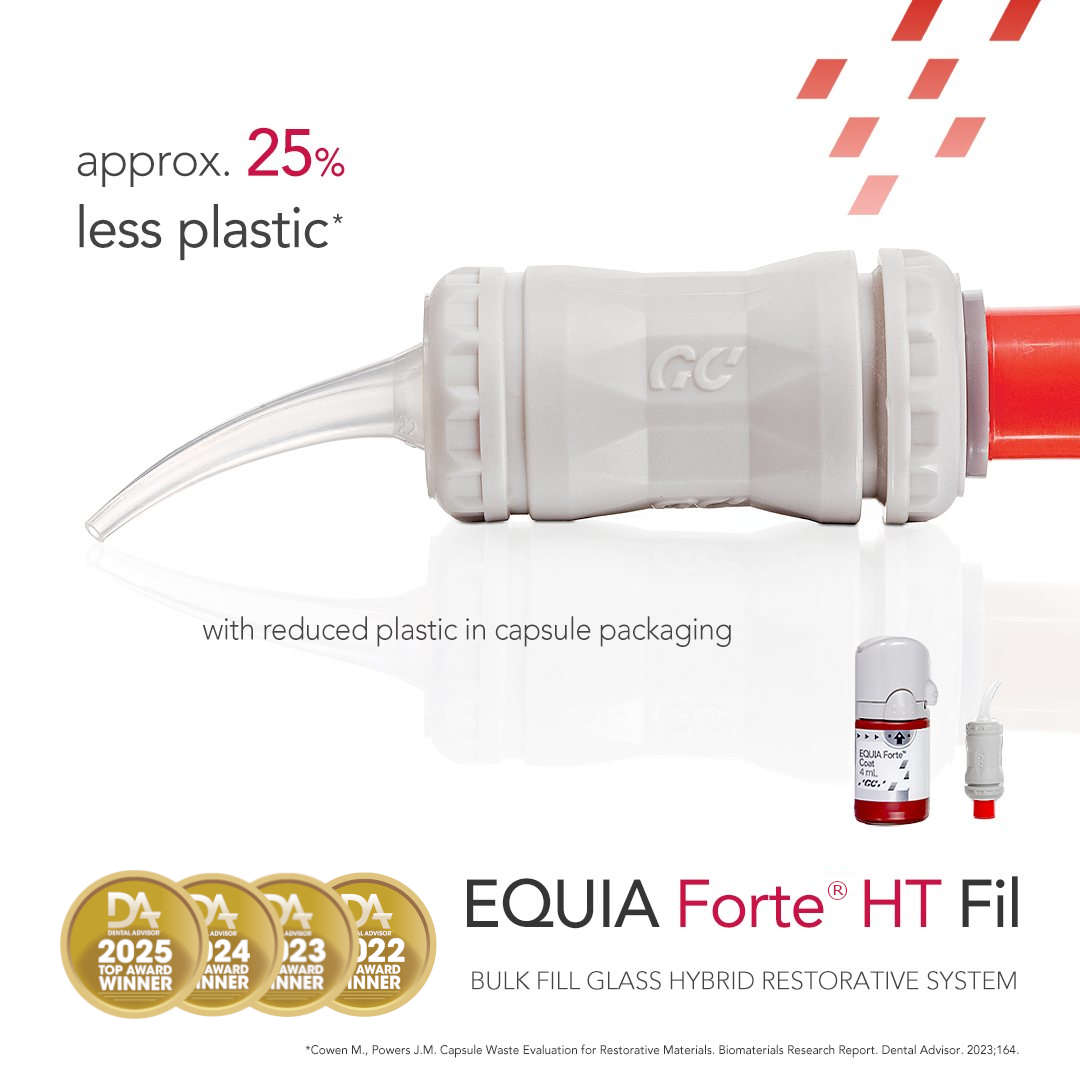
EQUIA Forte HT Fil capsule packaging has less total mass than the other products tested while wasting the least amount of packaging per gram of usable restorative, making it the most efficient packaging design.”

This means not only is less material wasted during application, but the packaging itself contributes less to environmental impact - a win-win for both clinicians and the planet.

Reducing single-use plastic and material waste in dental procedures is an important step toward greener practice management. With products like EQUIA Forte HT, clinicians can maintain high standards of care while contributing to a more sustainable future.

For practices aiming to align with eco-friendly initiatives without sacrificing clinical performance, EQUIA Forte HT is a strong and responsible choice.


Read The Full Dental Advisor Article Here

References

Dental Advisor. Capsule Waste Evaluation for Restorative Materials. Dental Advisor, 2023. 

Latest Blog Articles

From Trauma to Harmony: A Minimally Invasive Approach To Anterior Aesthetics

From Trauma to Harmony: A Minimally Invasive Approach To Anterior Aesthetics
By Dr. Sofien Riahi
Anterior dental trauma often results in aesthetic concerns that require careful and conservative management. Today, minimally invasive adhesive techniques enable clinicians to restore function and appearance with highly predictable and natural-looking results. Direct composite restorations, in particular, offer an effective solution by combining tissue preservation with excellent aesthetic integration.

Improving Clinical Efficiency Despite Staff Shortages

Improving Clinical Efficiency  Despite Staff Shortages
Article written by Bettina Loser
The shortage of skilled labor poses major challenges for dental practices. Structured and easy-to-understand workflows are therefore crucial, offering security and reducing workloads.

The Dos and Don’ts of Successful Cementation of Glass Ceramics and Zirconia

The Dos and Don’ts of Successful  Cementation of Glass Ceramics and Zirconia
By Stephen Langdon, Solventum Clinical Specialist (adapted from ‘Common cementation pitfalls and how to overcome them’ by Günther Schlosser, Training Manager, Solventum).
There are numerous steps on that journey to restoration success and the  before and during cementation workflow are crucial in the process of ensuring the retention, marginal seal and durability of that indirect restoration.

Restoring A Complicated Crown Fracture: A Step-By-Step Guide to Polychromatic Layering

Restoring A Complicated Crown Fracture: A Step-By-Step Guide to Polychromatic Layering
Case By Dr. Onur Alp Yünük
Complicated crown fractures in the anterior region present both functional and aesthetic challenges. They require a restorative approach that closely mimics natural tooth structure. Thanks to modern developments in adhesive dentistry and composite materials, it is possible to achieve highly aesthetic outcomes in a minimally invasive way.