page
Categories

Search Results for

Grid List
Filter By

All Results

  • Blog
  • Fill-Up! A new ally in fast posterior and high quality restorations.

Article

Fill-Up! A new ally in fast posterior and high quality restorations.

Coltene
Fill-Up!

A new ally in fast posterior and high quality restorations.

DR. FERNANDO GRANDÓN VILLEGAS DDS, MS, CHILE

The advent of adhesive dentistry and development of the latest generation composite resins have transformed the way to deal with restorative treatments for back teeth. Recent evidence highlights success rates of 82% to 90% after 10 years, comparable in terms of longevity to amalgam restorations. However, it is sensitive technique and entails performing a large number of steps. Against this backdrop, the development of photoreactive bulk-fill composites is an interesting way to make the process easier.

Larger increments are possible with low volumetric contraction and low polymerisation stress. One point still to be resolved is the excess translucency needed to facilitate the passage of light in increases of up to 5 mm, which is limiting when masking discoloured substrates. This makes these photoreactive bulk-fill composites highly dependent on the light curing device to guarantee a suitable degree of conversion. We are therefore pleased with the development of this new bulk-fill composite with flowable consistency, dual cure, simple dispensing and major adaptability, which solves the aforementioned problems.
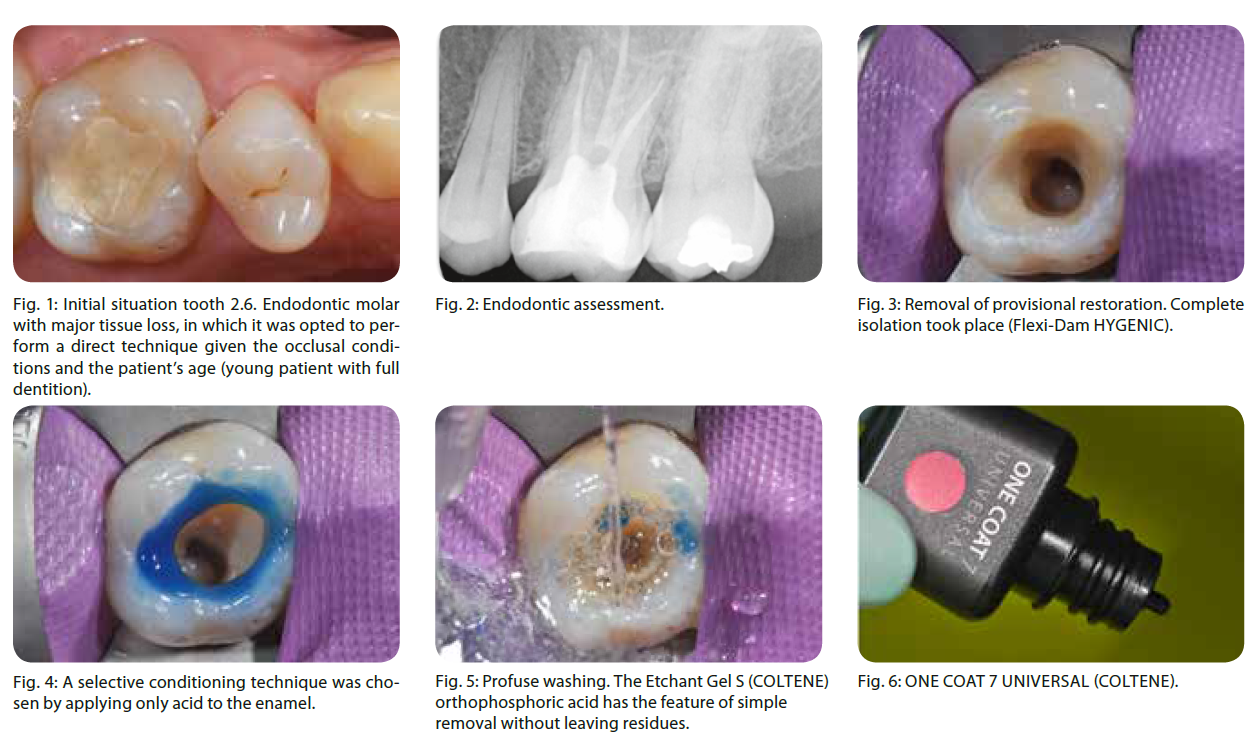
Figures 1-6
Figures 7-12
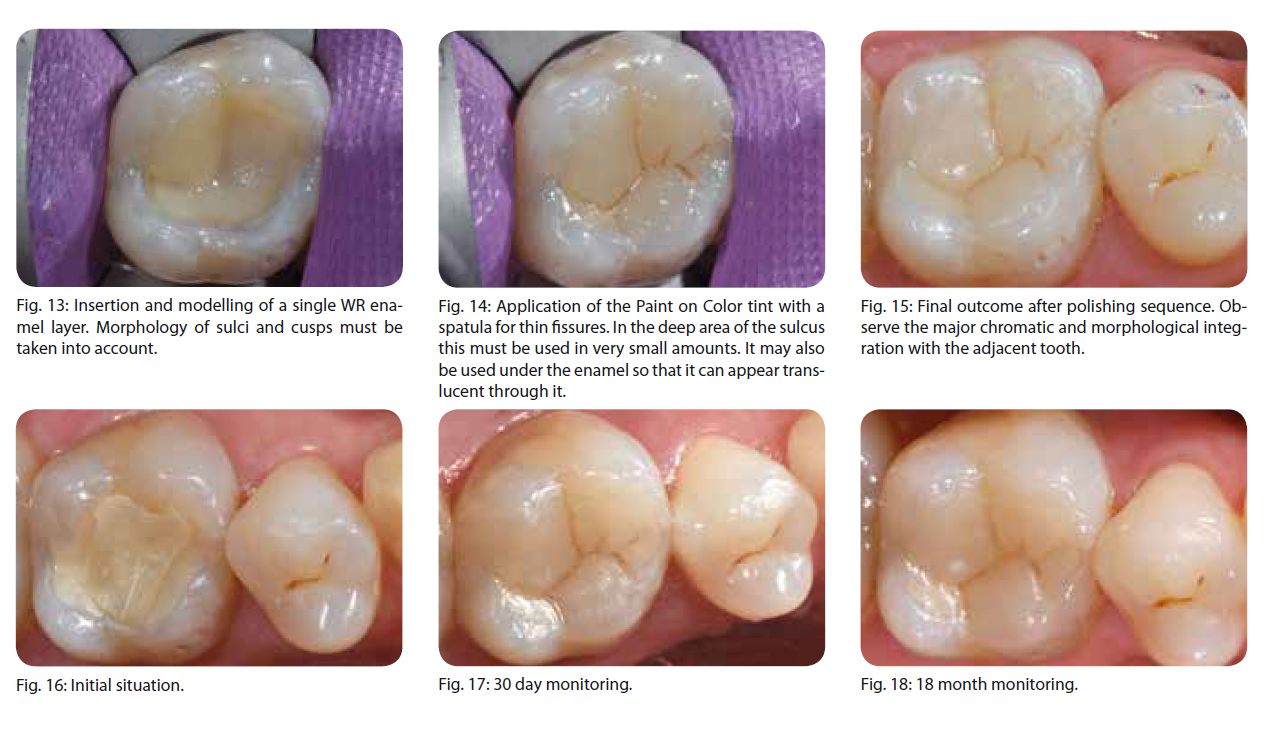
Figures13-18

CONTACT
Dr. Fernando Grandón Villegas – DDS, MS
Director Adhesive Aesthetic Odontology Programme
University of Concepción, Chile.
President Chilean Society for Oral Prosthesis
and Rehabilitation, Concepción Subsidiary.

Latest Blog Articles

From Trauma to Harmony: A Minimally Invasive Approach To Anterior Aesthetics

From Trauma to Harmony: A Minimally Invasive Approach To Anterior Aesthetics
By Dr. Sofien Riahi
Anterior dental trauma often results in aesthetic concerns that require careful and conservative management. Today, minimally invasive adhesive techniques enable clinicians to restore function and appearance with highly predictable and natural-looking results. Direct composite restorations, in particular, offer an effective solution by combining tissue preservation with excellent aesthetic integration.

Improving Clinical Efficiency Despite Staff Shortages

Improving Clinical Efficiency  Despite Staff Shortages
Article written by Bettina Loser
The shortage of skilled labor poses major challenges for dental practices. Structured and easy-to-understand workflows are therefore crucial, offering security and reducing workloads.

The Dos and Don’ts of Successful Cementation of Glass Ceramics and Zirconia

The Dos and Don’ts of Successful  Cementation of Glass Ceramics and Zirconia
By Stephen Langdon, Solventum Clinical Specialist (adapted from ‘Common cementation pitfalls and how to overcome them’ by Günther Schlosser, Training Manager, Solventum).
There are numerous steps on that journey to restoration success and the  before and during cementation workflow are crucial in the process of ensuring the retention, marginal seal and durability of that indirect restoration.

Restoring A Complicated Crown Fracture: A Step-By-Step Guide to Polychromatic Layering

Restoring A Complicated Crown Fracture: A Step-By-Step Guide to Polychromatic Layering
Case By Dr. Onur Alp Yünük
Complicated crown fractures in the anterior region present both functional and aesthetic challenges. They require a restorative approach that closely mimics natural tooth structure. Thanks to modern developments in adhesive dentistry and composite materials, it is possible to achieve highly aesthetic outcomes in a minimally invasive way.