
3D printing is great. A fun and exciting process, something futuristic that’s happening in the present, with great return on investment and optimized protocols - it’s the perfect entry to the CAM part of digital dentistry without breaking the bank.
My position is quite unique. I am part of a small family-run office and lab - one chair and a dental lab on-site.
However, working with analog protocols meant we could not reap the benefits of an in-house lab, so out of economic necessity we looked into digital. While the initial cost seemed too high, we still decided to go ahead.
We got our first 3D printer in 2017, a filament printer that could only be used for surgical implant guides and quickly did not match our needs anymore. Since resin printers offer a much greater versatility, we made the change.
Starting out with a low-cost DIY printer, which did not come with any dental specific features brought with it a big learning curve, however, was very affordable. The most significant drawback was the print inconsistencies and the time it took to tweak the printer to perform as required. It was clear that this was not sustainable in the long run.
Looking for more stability, speed, accuracy, and reliability, while remaining in an affordable segment, I found the Ackuretta DENTIQ.
Why buy an Ackuretta 3D printer?
So, I did some research, talked with some colleagues, and eventually someone from Ackuretta and we decided to give it a go. So why did I choose a unit from Ackuretta?
A few things really.
- First and most importantly: Feedback from other users. The consensus was generally: it delivers at high quality, accuracy, reliably and is easy to use.
- Secondly: DENTIQ had a really good PRICE POINT for a professional, calibrated DENTAL printer.
- Thirdly: Validated Workflows - Sometime after printing with DENTIQ and being happy with the performance we got ourselves a CURIE unit as well. So now the whole process of printing is safe and calibrated. Not only do I know that my prints will work, but I also have peace of mind that the final dental application that was printed exhibits the properties of the resin manufacturer intended - good, stable, and if needed - biocompatible and safe to use for my patients.
Li ke every new unit on the market - since I got one of the first DENTIQs initially we encountered some minor issues, but we managed to solve them with Ackuretta’s support. Now it’s our daily beater and we print almost everything with great success. Actually, in the last 6 months and hundreds of prints - we had not a single failed print.
And we print a lot - guides, temporaries, models, splints, cast patterns we press later in disilicate. So, from very basic applications to very precise and demanding ones, DENTIQ just delivers.
What defines a great 3D printer?
From my experience - great reliability is essential. DENTIQ is a nicely built unit. Compared to our other, cheaper hobby printers - the price difference is actually visible in the quality of the units.
Another must-have selling point for any of the printers you plan to choose - is material support. With Ackuretta you already have hundreds of resins to choose from.
This is crucial - for dental applications we need specialized resins. And most of the dental resin manufacturers will have support for dental printers, but not for hobby ones. Specialized printers, with calibrated resins, allow me to print temporaries in a totally digital modeless workflow and get reliable results every time.
Start to finish protocols
Being an open system and having loads of resins available - Ackuretta is great. I can choose from a variety of manufacturers and applications, to cover all the bases we need in our clinic/lab.
Choosing Ackuretta CURO resins is a no-brainer because the calibration and settings are on point. The printer/resin combination of the CURO line works extremely well. And having all the parts of the process from the same manufacturer means the final product is most likely to be as expected. Just think about it - IF you have a simple non-dental printer, no validated printing protocol from the dental resin manufacturer, and no clear post-processing guidelines - it’s hard to expect that the final product will work as intended.
Many things can go wrong, and, in the end, you might experience failed or inaccurate prints, or even worse, might have some biocompatibility issues if the post-processing protocol is not robust. 
Ackuretta here is one of a few dental printers and resin manufacturers that offer a complete solution. So, it’s definitely a great option for anyone looking to start their 3D printing journey. You will not only get all parts of the 3d printing equation - printer, washing unit, curing box, and resin. But also, all come with a simple, hassle-free setup, and foolproof printing experience. And most importantly - safe and validated protocols - so PEACE of MIND that everything will work as intended at no compromise for patient safety.
Return on investment (ROI) of 3D printing
I never liked calculating ROI for my dental purchases. Most of the things I bought for the practice had no ROI at first glance. The same can be thought about 3D printing.
With a few $ per temporary crown, guide or splint - it’s easy to see that 3D printing is a bargain compared to traditional milled applications.
However, it’s important to understand that some of the ROI is not direct but comes in different shapes. Most of the digital protocols will mean less chairside and lab bench time. Productivity will increase, protocols will be faster, and patients will be happier.
Since printing is a fast procedure - we can make same-day surgeries, same-day temps easily accessible in any practice. The same goes for repairs or accidents - patient breaks temporaries or loses a splint? You can schedule him or her for the afternoon and have a new prosthesis ready for a fraction of the cost. Better yet - it’s easy to print everything in pairs, and if anything happens - always have a spare at hand - because the material cost is so low, and the printing process timewise is still the same if we print one or two applications at the same time.
Article Published in Dental Solutions Nov/Dec 2022
About the Author
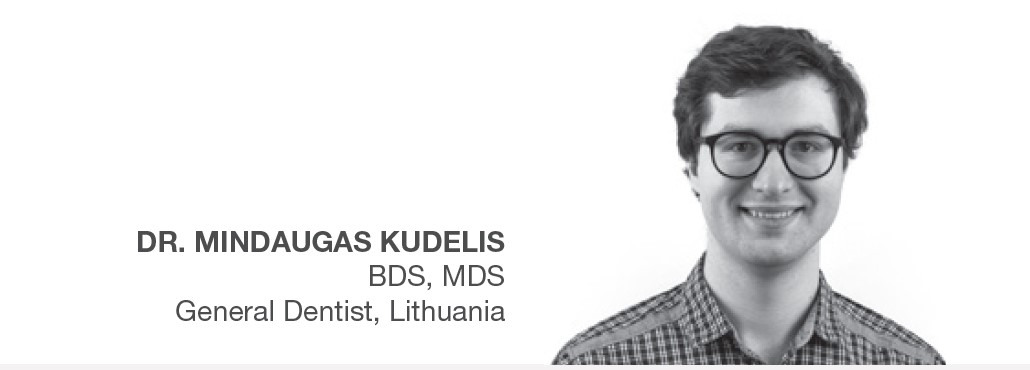
Dr. Kudelis is a member of the RIPE Global Educator Team and specializes in restorative and implant dentistry.
As general dentists based in Lithuania, Dr. Kudelis is part of a family-owned lab and dental office and has been focusing on integrating digital workflows into his office for years.