We are living for longer and maintaining our expectations of function and aesthetics into maturity. Ageing well is important [1].
Many of our ageing patients are motivated to maintain long-lasting smiles that are both aesthetic and functional. But what happens to our teeth as we age? And what can you do to help your patient's smile last the distance?
It's (partly) about dentine and enamel.
Dentine is predominantly made of hydroxyapatite mineral and collagen. The findings from my PhD indicate that in mature teeth, dentine mineral deposits fill the tubules to span from the pulp through to the dentine-enamel junction [2, 3]. The dentine collagen weave becomes less organized because of a process known as cross-linking that results in a stiff collagen matrix [4]. A combination of stiff collagen and increased minerals makes mature teeth more brittle, and prone to fracture [5].
Furthermore, the increase in tubular mineral and change in the collagen network, combined with the increased formation of new dentine around the periphery of the pulp, results in a noticeable change in light transmission through the tooth to affect aesthetics [6].
Aged enamel appears aesthetically different as well. With time, the hard enamel thins due to wear, attrition, abrasion and erosion [7]. The thinned enamel remains connected to dentine that acts to cushion the forces we place on teeth. Yet the characteristic change to aged dentine reduces the capacity to dissipate forces, to form visible crazes and cracks to develop in the enamel [5].
The food and drinks we consume fill the micro-gaps created by the crazes and cracks to discolour and stain teeth. Aesthetically, these stains are easily managed by tooth whitening using peroxide-containing products [8] such as the Colgate Optic White range. However, there are other ways we can help our patients extend the life of their teeth. Here are seven tips to prevent dental decline.
1. Avoid unnecessary forces
Counsel your patients to avoid using their teeth for non- functional activities [9] such as holding working tools or to open packaging.
Help your patients avoid unnecessary forces such as grinding or clenching by screen ing for Sleep Apnoea [10] and bruxism at their check-up appointments. Depending on the severity of sleep apnoea, your patients may benefit from an anterior advancement mandibular splint or a CPAP machine. For those who experience nocturnal grinding, encourage the use of an occlusal splint [11].
For patients who have large restorations [12], or root canal treated teeth [13], consider full or partial coverage indirect restorations to support the remaining tooth structure from cracking or breaking [14].
Most ageing patients will have missing teeth, particularly in the posterior region of their mouth. Review your patient's chewing capacity. Occasionally, despite having a near full complement of teeth, some patients may lack reasonable points of functional contact. Encourage your patient to consider treatment options that distribute the forces evenly, to prevent the wear and breakdown of the limited number of teeth that are being 'overloaded'.
Some options you may consider are bridges [15], implants [16] and well-fitted dentures [17] to support your patient's function and occlusion. Ensure the dentures are checked regularly for fit and support, and replace these every ten years [18].
Don't forget to educate your patients on how to care for their new fixed or removable prostheses. For those with good manual dexterity and existing oral hygiene habits such as flossing, encourage your patients to continue the process. Support your patients with additional needs, for example by encouraging the use of interdental brushes. For those who struggle to reach posterior teeth, or have issues with manual dexterity, or even floss-avoiders, a Colgate water flosser could be a good solution.
3. Preserve enamel
Enamel is the hard crystal coat that lends to aesthetics and protects dentine from acidic challenges [19]. Enamel preservation includes using appropriate toothbrushes, technique, toothpastes and avoiding erosive influences.
Counsel patients to replace hard bristled brushes with soft ones and encourage the use of electric brushes that provide additional monitoring capacity.
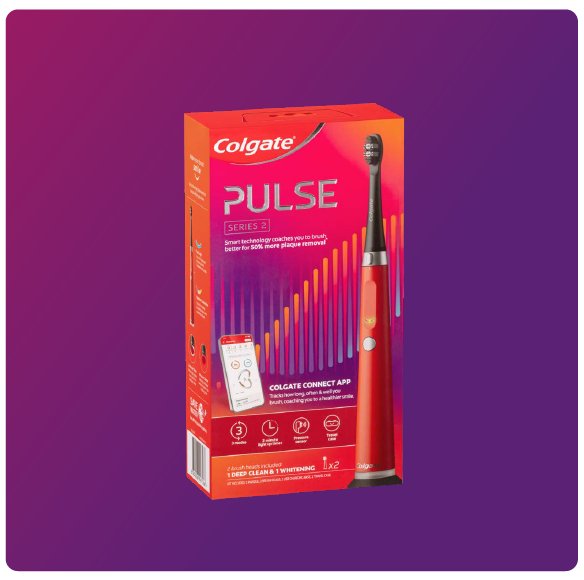
For instance the Colgate Pulse Series 2 connects with an app on their phone to help monitor 'hard' brushing with a pressure sensor, brushing times and helps patients locate where they are missing the cleaning.
Help patients understand the nature of acids in their diet [9]. Many people believe that acids are 'alkaline' due to a popular health movement. Unfortunately, these patients succumb to drinking apple cider vinegar and lemon juice when their teeth are most vulnerable on awakening or consume 'refreshing' citrus fruits after physical exertion.
4. Enhance saliva
The buffering capacity of saliva reduces the effects of acid challenges, flushes teeth and gums, promotes soft tissue healing and prevents erosion and decay [20]. Healthy saliva flow is also significant to help patients digest carbohydrates, swallow and speak.
As we age, saliva quality and quantity declines, often exacerbated by age-related changes to salivary glands and life-saving medications that are xerostomic. Two medications that cause significant symptoms in patients include antidepressants and antihypertensives [21]. If you are concerned about medication-related xerostomia, counsel your patients and contact their GP to advocate for substitution. Patients who suffer from reflux may benefit from medications to mitigate acid regurgitation. This is also another worthwhile reason to speak to your patient's doctors. Many GPs welcome collaborative care of our patients [22].
5. Manage periodontal disease
Chronic periodontal disease is often a painless, occasionally asymptomatic issue that can cause significant tooth loss to affect health, function and aesthetics. Most ageing people who suffer with periodontal disease often encounter multiple comorbidities [23], and you may be the first person to identify such issues. Encourage patients with periodontal issues to be assessed for conditions such autoimmune disorders or diabetes.
Other than tooth retention, explain the significance of maintaining gum health, including reducing the immune load to the body and reducing gingival recession to prevent exposed darker tooth roots. Root surfaces, particularly in ageing people, are more susceptible to caries and erosion [24].

6. Manage and prevent senescence
Cellular senescence is the process that changes DNA in our cells to reduce our ability to withstand physical, chemical or biological damage. Cellular senescence enhances new cancer formation, the spread of existing cancers and the onset of chronic illnesses such as Alzheimer's disease, diabetes, osteoporosis and heart disease [25].
We can help our patients reduce cell damage by helping them manage lifestyle factors such as smoking, uncontrolled diabetes and chronic infections such as periodontal disease.
7. Help our patients to adapt and evolve with their changing needs
Ageing affects cognition, manual dexterity and eyesight to prevent your patients from practicing oral hygiene to the best of their ability [26]. Regular recalls are an opportunity for you to observe these changes in your patients. Occasionally, you may note that a previously diligent patient may have reduced capacity or let their oral hygiene slip. In these instances, switching your patient to higher fluoride toothpastes, mouthwashes and helping them switch from practices such as flossing to interdental brushes may be helpful [27]. Increasing the regularity of their cleaning appointments may also serve to keep a check on your patients and support their needs better.
So, remember ageing teeth are prone to fracturing and breaking. You can help your patients extend the life of their smile by helping them reduce unnecessary masticatory forces on existing dentition, share the load by using removable or fixed dental prostheses, preserve enamel, enhance saliva, manage periodontitis, mitigate senescence and adapt with your patients. We are all in this together.
Dr Arosha Weerakoon
Dr Arosha Weerakoon is a Senior Lecturer at the School of Dentistry, The University of Queensland (UQ), and owner of Tewantin Family Dental.
Arosha has a Master's in Public Health and a PhD (UQ); her thesis is titled, 'Dentine, Adhesive Interfaces & Physiological Ageing'. She is a Fellow of the Royal Australasian College of Dental Surgeons, the International College of Dentists and the Pierre Fouchard Academy. Arosha is the Assistant Secretary for the International Dental Ethics and Law Society, and Deputy Chair and oral health representative for the Country to Coast Queensland Clinical Advisory Council.
In recognition of her commitment to professional learning and development, Arosha was awarded the 2022 BOQ Specialist Practice Bursary for Dental Excellence from the Australian Dental Association (QLD). In 2019, Aorsha was awarded the Brisbane Lord Mayor's Convention Trailblazer Grant. In the same year, Arosha won the top prize, The Vice Chancellor's Award, for her research pitch titled 'It's about bonding with fillings', hosted by Universities Australia. As part of her prize, Arosha completed an internship at The Conversation Media Group Headquarters in Melbourne. To date, she has published eleven articles promoting oral health with The Conversation Media Group.
Arosha believes that community engagement, interdisciplinary collaboration and patient empowerment is the key to improving oral and general health for all. She hopes to use her role as a Colgate Advocate for Oral Health to create meaningful discussions with oral and general health professionals to improve health practices, patient outcomes and to encourage more clinicians to engage with research.

Reference List
1. Jones, J.A., et al., Edentulism Predicts Cognitive Decline in the US Health and Retirement Cohort Study. J Dent Res, 2023. 102(8): p. 863-870.
2. Li, C., et al., Dentinal mineralization is not limited in the mineralization front but occurs along with the entire odontoblast process. International journal of biological sciences, 2018. 14(7): p. 693.
3. Weerakoon, A.T., et al., Does dentine mineral change with anatomical location, microscopic site and patient age? Journal of Structural Biology: X, 2022. 6: p. 100060.
4. Weerakoon, A.T., et al., Dynamic dentin: A quantitative microscopic assessment of age and spatial changes to matrix architecture, peritubular dentin, and collagens types I and III. Journal of Structural Biology, 2022. 214(4): p. 107899.
5. Weerakoon, A.T., et al., Coronal dentin differs between young and mature adult humans: A systematic review. Archives of Oral Biology, 2022. 144: p. 105553.
6. Miura, J., et al., Accumulation of advanced glycation end-products in human dentine. Archives of oral biology, 2014. 59(2): p. 119-124.
7. Atsu, S.S., et al., Age-related changes in tooth enamel as measured by electron microscopy: Implications for porcelain laminate veneers. The Journal of Prosthetic Dentistry, 2005. 94(4): p. 336-341.
8. Irusa, K., et al., Tooth whitening procedures: A narrative review. Dentistry Review, 2022. 2(3): p. 100055.
9. Kaidonis, J.A., Oral diagnosis and treatment planning: part 4. Non-carious tooth surface loss and assessment of risk. British Dental Journal, 2012. 213(4): p. 155-161.
10. Association., A.S. Obstructive Sleep Apnoea Assessment Questionnaires. [Webpage] 2024 [cited 2024 Octoer 20]; Available from: https://www.sleepprimarycareresources. org.au/osa/assessment-questionnaires.
11. Minakuchi, H., et al., Managements of sleep bruxism in adult: A systematic review. Japanese Dental Science Review, 2022. 58: p. 124-136.
12. Tennert, C., et al., Posterior ceramic versus metal restorations: A systematic review and meta-analysis. Dental Materials, 2022. 38(10): p. 1623-1632.
13. Dioguardi, M., et al., The influence of indirect bonded restorations on clinical prognosis of endodontically treated teeth: A systematic review and meta-analysis. Dental Materials, 2022. 38(8): p. e203-e219.
14. Kaup, M., et al., Shear bond strength of Biodentine, ProRoot MTA, glass ionomer cement and composite resin on human dentine ex vivo. Head Face Med, 2015. 11: p. 14.
15. Whang K, Resin-based Composites, in Phillips' science of dental materials, Anusavice KJ, et al., Editors. 2013, Elsevier/Saunders: St. Louis, Mo.
16. Misch, C.E., et al., Posterior Implant Single-Tooth Replacement and Status of Adjacent Teeth During a 10-Year Period: A Retrospective Report. Journal of Periodontology, 2008. 79(12): p. 2378-2382.
17. Oki, K., et al., The Significance of Posterior Occlusal Support of Teeth and Removable Prostheses in Oral Functions and Standing Motion. International Journal of Environmental Research and Public Health, 2021. 18(13): p. 6776.
18. Taylor, M., M. Masood, and G. Mnatzaganian, Longevity of complete dentures: A systematic review and meta-analysis. The Journal of Prosthetic Dentistry, 2021. 125(4):
p. 611-619.
19. Zanatta, R.F., et al., Comparison of micro-CT and conventional dye penetration for microleakage assessment after different aging conditions. International journal of adhesion and adhesives, 2019. 89: p. 161-167.
20. Xu, F., L. Laguna, and A. Sarkar, Aging-related changes in quantity and quality of saliva: Where do we stand in our understanding? Journal of Texture Studies, 2019. 50(1): p. 27-35.
21. Gueiros, L.A., M.S. Soares, and J.C. Le o, Impact of ageing and drug consumption on oral health. Gerodontology, 2009. 26(4): p. 297-301.
22. Weerakoon, A., L. Fitzgerald, and S. Porter, An Australian government dental scheme: Doctor-dentist-patient tensions in the triangle. The Journal of Forensic Odonto- stomatology, 2014. 32(Suppl 1): p. 9.
23. Liu, Y., et al., Does Periodontitis Affect the Association of Biological Aging with Mortality? J Dent Res, 2023. 102(8): p. 909-918.
24. Leiva-Sabadini, C., et al., Nanoscale Dynamics of Streptococcal Adhesion to AGE- Modified Collagen. Journal of Dental Research, 2023. 102(8): p. 957-964.
25. Aquino-Martinez, R., The Emerging Role of Accelerated Cellular Senescence in Periodontitis. J Dent Res, 2023. 102(8): p. 854-862.
26. Yang, Y., et al., Improving oral hygiene for better cognitive health: Interrelationships of oral hygiene habits, oral health status, and cognitive function in older adults. Journal of Advanced Nursing, 2024. 80(1): p. 275-286.
27. Woon, C., Improving oral care for hospitalised patients: choosing appropriate products. British Journal of Nursing, 2020. 29(9): p. 520-525.