
As preventive dentistry continues to evolve, the management of plaque, calculus and biofilm remains a key focus of both hygiene and periodontal treatment. Advances in technology have provided clinicians with a growing range of tools designed to support efficient treatment delivery while enhancing the patient experience.
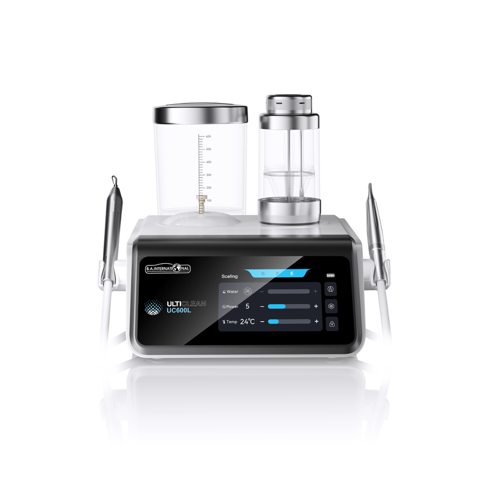
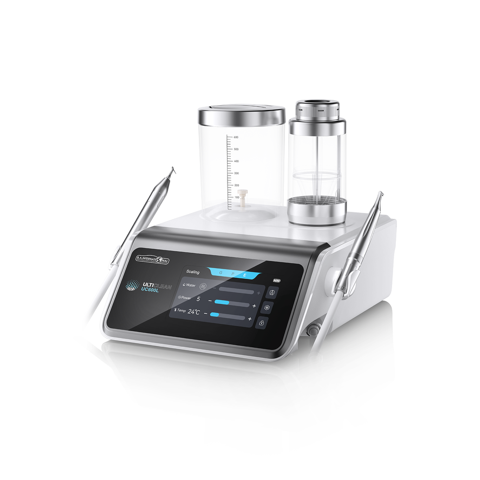
The BA Ulticlean UC600L Scaler & Air Polisher has been developed to support a range of preventive, periodontal and maintenance procedures by combining piezo ultrasonic scaling and air polishing within a single device arriving as a complete “Practice in a Box” package housed in a premium aluminium travel case.
Building on the Ulticlean range, the UC600L incorporates integrated LED illumination, dual heating technology and multiple operating modes designed to support everyday clinical workflows.
A Versatile Approach to Hygiene and Maintenance
Modern dental practices are increasingly looking for equipment capable of supporting a variety of treatment applications without the need for multiple standalone units.
The BA Ulticlean UC600L brings together ultrasonic scaling, air polishing, implant maintenance, endodontic applications and irrigation functions within one system. The unit features six ultrasonic operating modes, allowing clinicians to adapt treatment settings to a range of clinical scenarios. Additional implant maintenance settings provide flexibility when managing implant patients as part of ongoing supportive care programs.
By integrating these functions into a single unit, practices may be able to simplify workflow management while maintaining access to a broad range of treatment options.
Designed Around Everyday Clinical Practice and Infection Control
Ease of use remains an important consideration when introducing new equipment into a busy dental environment. The UC600L includes several features intended to support day-to-day usability and efficiency.
Integrated LED illumination on the scaler is designed to improve visibility, while the intelligent powder containers glow blue for subgingival powder and white for supragingival powder. This intuitive colour-coding provides an instant visual safeguard to ensure the clinician uses the correct powder formulation, which is critical, as accidentally using abrasive supragingival powder in a periodontal pocket can cause severe tissue damage. Furthermore, the included powder guide spout (spigot) allows staff to carefully dispense powder during refills, avoiding messy spills and costly product waste.
The lightweight, anti-slip handpiece has been developed to provide stability and control throughout treatment preventing hand fatigue. Because the handpieces are constructed from durable metal, they are fully autoclavable, helping the clinic meet the highest infection control standards.
The unit also incorporates an adaptive user interface featuring adjustable brightness settings, a “Smart Maintenance Reminder”, a one-touch screen lock, and multilingual support. The intelligent software acts as an automated fleet manager, tracking the device’s working hours and prompting the user exactly when consumable parts need replacement, taking the guesswork out of maintenance. Meanwhile, the screen lock function allows staff to safely wipe down the intuitive touchscreen mid-procedure without accidentally altering settings.
Automated cleaning programs further simplify system maintenance and help streamline workflow between patients. Crucially, the automated purge function forcefully clears residual powder and moisture from the pipelines with a single button press. This helps avoid powder clumping, the primary cause of air polisher failures, drastically reducing manual cleaning time and preventing frustrating blockages.
Supporting Patient Comfort and Operational Uptime
Patient comfort continues to be an important factor in the delivery of preventive and periodontal care. To support a more comfortable treatment experience, the UC600L incorporates a dual heating system that provides warmed water for both ultrasonic scaling and air polishing procedures. By delivering water heated precisely to body temperature, the system minimises the thermal shock that causes patient anxiety on sensitive teeth. Comfortable patients are more compliant and far more likely to return for routine hygiene maintenance.
The system also features an updated air polishing design intended to operate at a lower noise level than commonly used settings, contributing to a more comfortable clinical environment. To further assist clinicians during procedures, the package includes both a Bluetooth wireless foot pedal and a wired backup pedal. The wireless pedal eliminates cable clutter around the chair, giving the operator complete freedom of movement. By providing the wired pedal as a backup, the clinic is guaranteed zero downtime. If the wireless pedal runs out of battery mid-shift, the user simply plugs in the wired one and continues working.
Considering Long-Term Equipment Support
When evaluating new equipment, practices often consider not only clinical functionality but also long-term serviceability and maintenance support.
Through Henry Schein Australia, BA International equipment is supported by the Hayes Handpiece and Equipment Service Team. Hayes provides local servicing and repair support, helping practices access technical assistance and maintenance services when required. As highlighted previously with the UC500L platform, access to local service expertise may assist practices in maintaining equipment performance and minimising downtime over the life of the unit.
Looking Ahead
As dentistry continues to place greater emphasis on prevention, supportive periodontal care and biofilm management, clinicians are increasingly seeking equipment that combines versatility, usability and patient-focused design.
The BA Ulticlean UC600L Scaler & Air Polisher has been developed to support these evolving workflows through a combination of ultrasonic scaling and air polishing technology, integrated LED illumination, dual heating functionality and simplified maintenance features. Designed for a range of clinical applications, it represents a practical addition to modern dental hygiene and periodontal care settings.
Regulatory and Content Notice: This article has been developed using manufacturer-provided product information and refined using artificial intelligence (AI)-assisted drafting tools. The content has been reviewed for accuracy against available source materials and is intended for informational purposes only. Product features and intended applications are based on manufacturer information and do not constitute claims of clinical superiority, treatment outcomes, efficacy or specific patient benefits beyond the manufacturer's published information. Healthcare professionals should refer to the product Instructions for Use (IFU), relevant clinical guidance and their professional judgement when assessing suitability for their practice.