
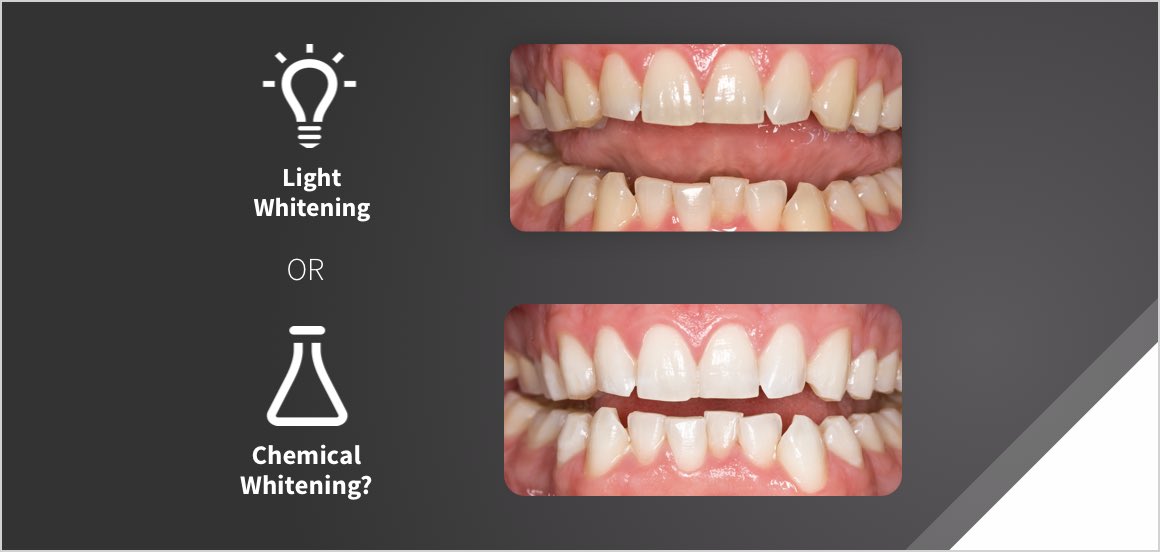
Light VS No Light in Teeth Whitening
Your patients are seeing it all over social media, television, and beauty blogs, so no wonder they’re demanding whitening treatments that use some kind of light!
So, how do you educate them on the reality behind tooth whitening and the effectiveness products that use lights vs. those that do not?
The first and most important thing to help your patients understand is that the evidence from more than a dozen independent clinical trials show that tooth whitening using lights will not improve whitening effect.1
Patients were introduced to the idea of light used whitening treatments years ago on shows like Extreme Makeover, and this has prevailed and stuck in the minds of patients when, in reality, the light creates a very temporary whiter result, and can cause other negative side effects, including oral burns and pulpal stimulation.2
Secondly, lights used in many whitening systems simply dehydrate the teeth, which gives them a temporary whiter appearance. It is not uncommon to find that many of these same patients experience a significant colour rebound.
Dehydration can be a factor in tooth sensitivity, so the more dehydrated the patients’ teeth are due to light exposure, the more relapse and sensitivity they are likely to experience.
The good news is that there are safe and effective alternatives, without the use of a light or any other gimmicks. The most effective way to whiten teeth with the least risk of sensitivity and shade relapse is through prolonged exposure to pH stable and optimized active whitening agents on the tooth’s surface.
This can be achieved in-office with Opalescence™ Boost™ or at-home with the use with dentist-supervised products like Opalescence™ PF and Opalescence Go™, all of which formulated with desensitising agents and a high water concentration to provide extra safeguards against sensitivity, dehydration, and shade rebound.
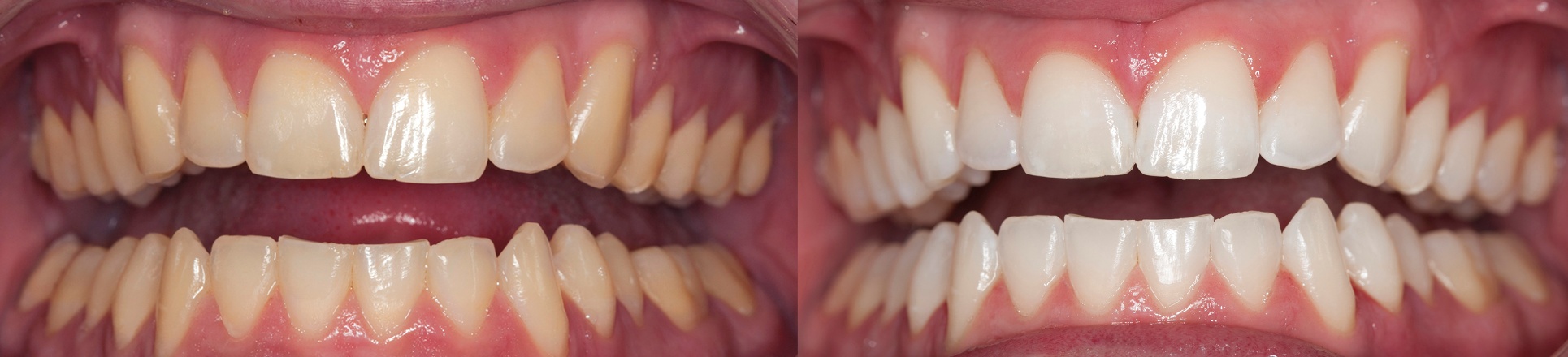
Opalescence™ Boost™ in-office whitening offers patient’s an in-office, dramatic whitening experience without the use of a light, helping patients to avoid unnecessary sensitivity
Continue reading more from Ultradent here
References:
1. Maran, M.M., et al (2018). In-office dental bleaching with light vs. without light: A systematic review and meta-analysis. Journal of Dentistry, 70(2018) 1-13.
2. Bruzell, E.M., et al (2009). In vitro efficacy and risk for adverse effects of light-assisted tooth bleaching. Journal of Photochemical & Photobiological Sciences, 2009, 8, 377-385.