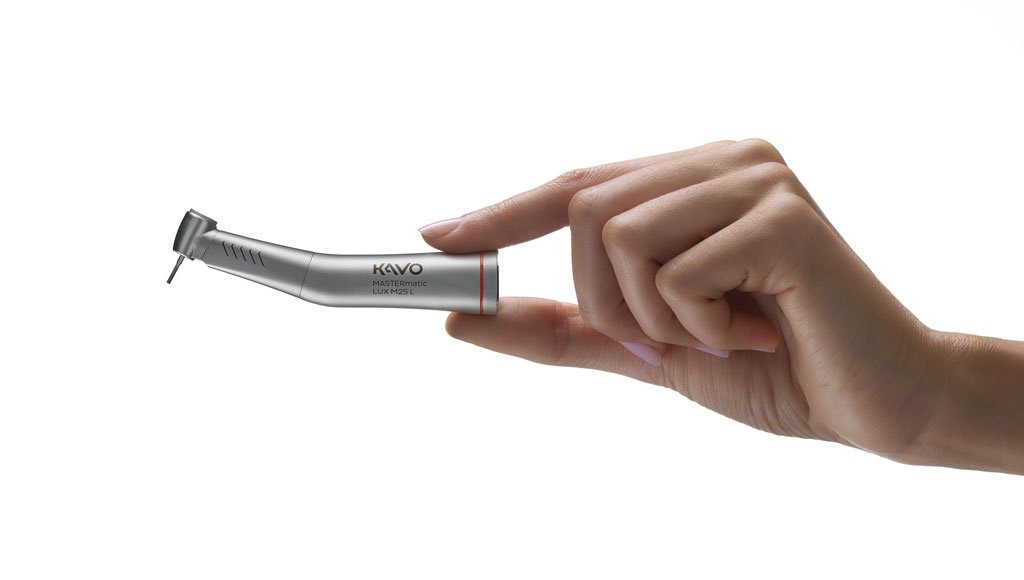
There’s a reason KaVo handpieces turn up in so many practices year after year, and it isn’t luck. It’s Biberach.
Every KaVo handpiece is made at the company’s own plant in Biberach, Germany, where 95 per cent of all components are manufactured on site. That’s unusual in an industry where most manufacturers long ago outsourced production. KaVo hasn’t. The result is a level of quality control that’s hard to replicate: raw stainless steel rods come in one door, finished handpieces go out the other, and almost every step in between happens under one roof, checked against the same exacting standard.
That standard is measured in microns. One micron is 0.001mm, and it’s the tolerance KaVo works to when machining the up-to-50 components inside a single handpiece. Final assembly happens in dust-free rooms, with air constantly purged and temperature, humidity and air pressure held steady, because even a speck of dust can compromise a bearing designed to spin at up to 40,000rpm for years without complaint.
It’s also measured in people. Around 440 highly qualified staff work at the Biberach facility, with an average tenure of more than 20 years. That’s two decades of institutional knowledge about what makes a handpiece survive daily clinical use, built up long before a new instrument reaches testing.
And testing is where KaVo gets genuinely rigorous. Before any handpiece reaches serial production, it has to withstand several billion rotations without failure. Bur retention has to hold at up to 30 newtons. On KaVo’s turbines, Direct Stop Technology has to bring the bur to a halt in under a second, every time, for greater safety during treatment. Only once an instrument clears that bar does it go into full production, and every single unit is tested and polished again before it leaves the factory.
The numbers speak for themselves. KaVo has sold more than six million instruments worldwide, including the EXPERTmatic E25 L, with production of that model alone topping 100,000 units. Perhaps more telling is the repurchase rate: 98 per cent of customers who buy a KaVo instrument buy KaVo again. In a category where clinicians reach for the same handpiece dozens of times a day, that kind of loyalty isn’t won on price. It’s earned through reliability, treatment after treatment, year after year.
For Australian and New Zealand practices weighing up their next handpiece purchase, that’s the real value proposition: not just a well-engineered instrument on day one, but one built to a standard that holds up over the working life of the practice. It’s the difference between buying a handpiece and investing in one.
KaVo has been refining that approach to instrument-making since 1909, and the Biberach plant remains the reason its handpieces keep earning a place in practices around the world.