By Stephen Langdon, Solventum Clinical Specialist (adapted from ‘Common cementation pitfalls and how to overcome them’ by Günther Schlosser, Training Manager, Solventum).
The longevity and success of indirect restorations has always been influenced by laboratory, dentist and eventually the patient. The dentist in particular manages tooth preparation, impressioning (analogue or digital), temporisation, decision on materials selection and cementation. There are numerous steps on that journey to restoration success and the before and during cementation workflow are crucial in the process of ensuring the retention, marginal seal and durability of that indirect restoration.
The daily challenge – a high variety of indications and materials and which cement to choose for long term success.
Dentistry has significantly benefited from the introduction of an expanded range of ceramic options with better aesthetics, increased resistance to fracture, biocompatibility and as a result – expanded clinical indications. Each ceramic is unique in terms of its composition, and choosing the appropriate cement for each clinical situation, taking into account preparation variables can sometimes be difficult and confusing. To achieve a successful outcome, the clinician must understand the ceramic type chosen, ensure clear communications with their laboratory, be on top of surface treatment requirements, and ultimately ensure the correct cementation material and strictly adhere to the procedure protocols required. In order to avoid early failures, it is essential to identify but also understand those potential sources of error and to ensure that simple checklists and strategies are in place to minimise them.
With our experience from 1000’s of training courses to our enormous troubleshooting database built-up from dental offices from around the globe, frustratingly there continues to be mistakes made when placing indirect restorations and yet the great majority of them are easily preventable. Let’s take a closer look at common cementation pitfalls that can lead to failure, how to overcome them and ultimately, ensure consistency in protocols resulting in long-term success.
Your check list to success starts with communication to and from your laboratory. It is critical that both parties have a thorough, totally transparent understanding of who is doing what in terms of deciding on restoration material choice, the pre-treatment and cleaning protocols for the chosen restorative material. To ensure cementation and restoration longevity success there can be no shortcuts or any missed steps in the procedure protocols.
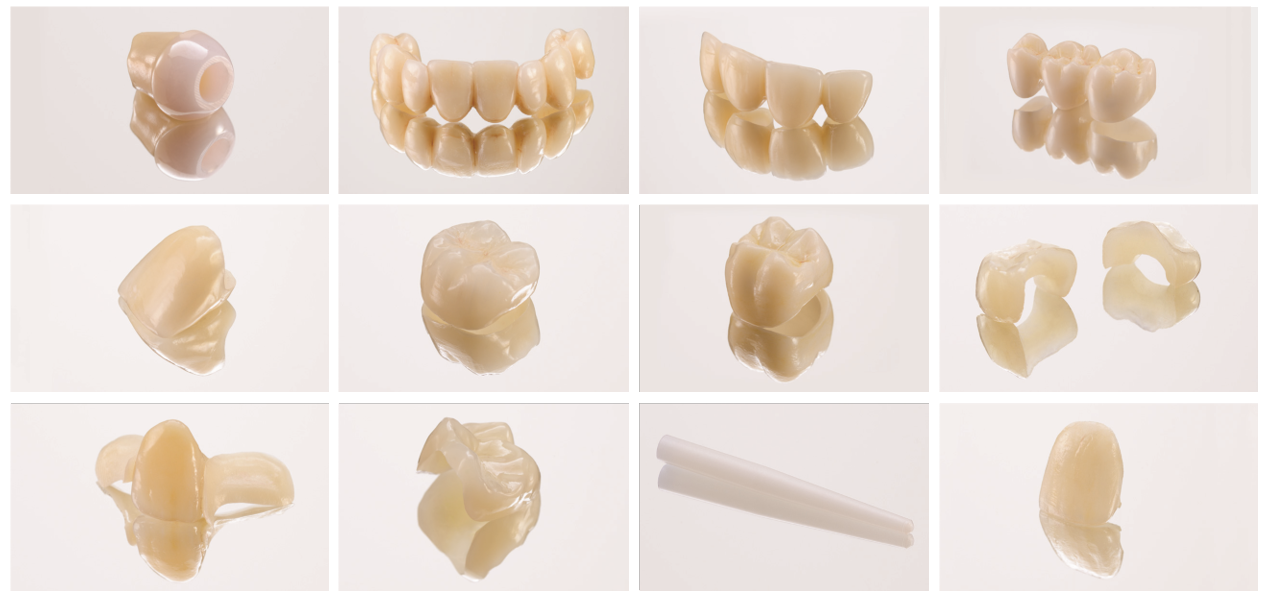
In this discussion review, we will focus on the two most widely used indirect restorative materials of choice – Glass Ceramics and Zirconia.
Pretreatment.
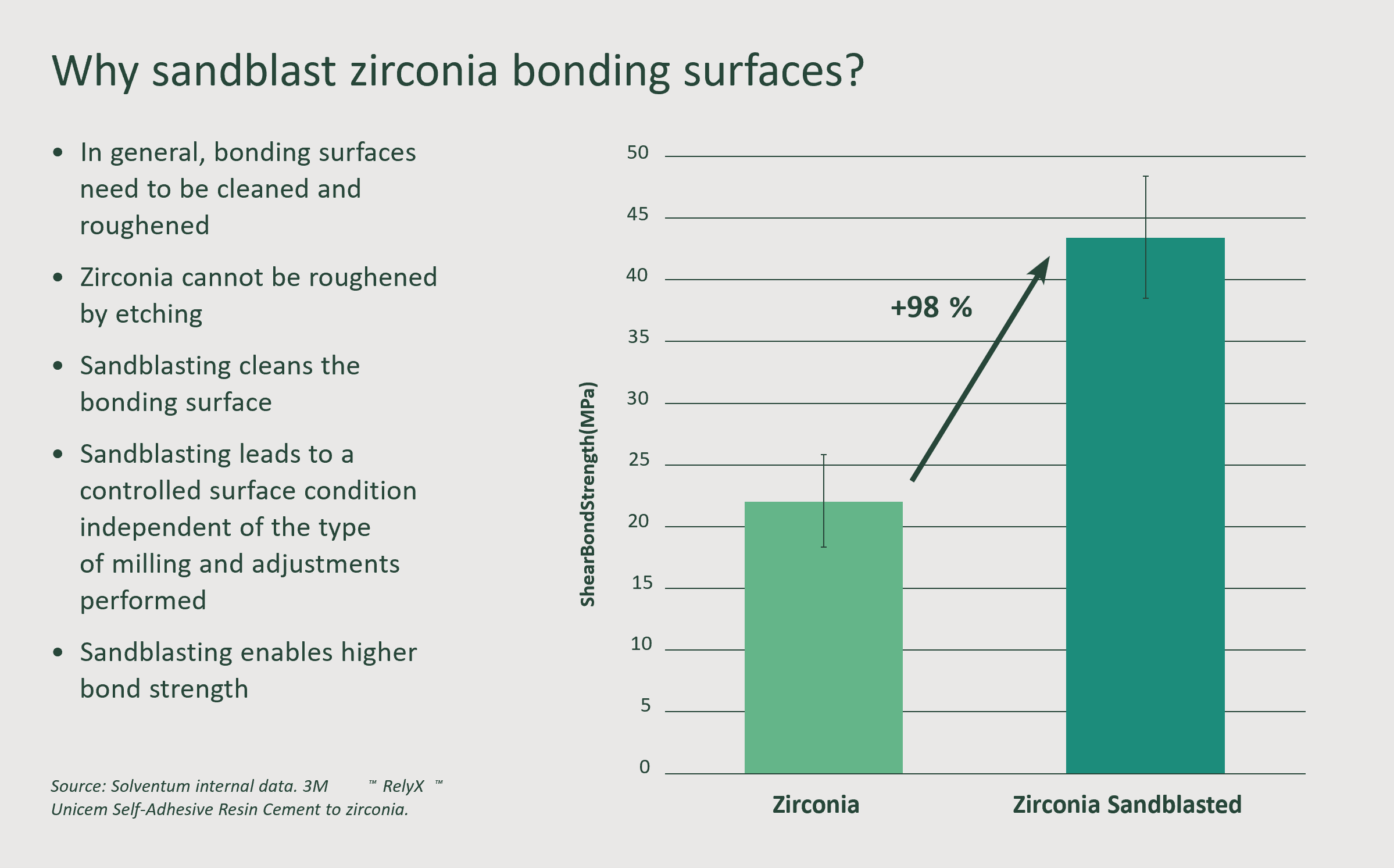
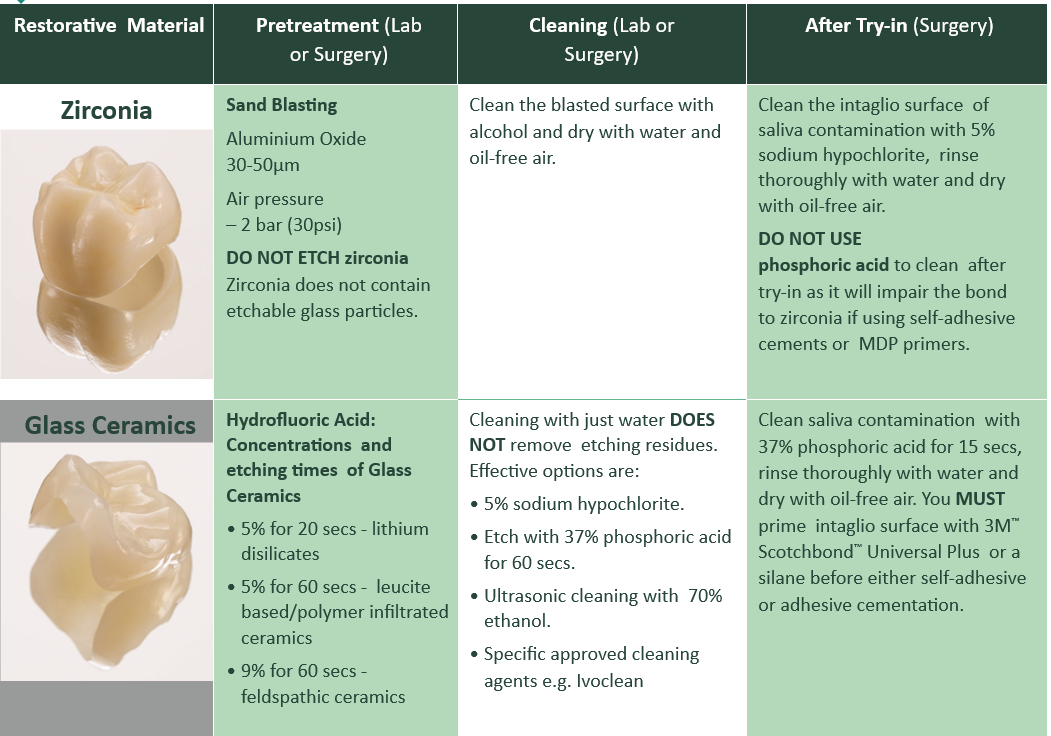
Since glass ceramic bonding surfaces need to be pretreated with hydrofluoric acid, while zirconia surfaces require sandblasting, it is essential that all parties know exactly what they are responsible for, what has been arranged with your laboratory technician in regard to the required surface pretreatment and cleaning based on substrate.
In the surgery it is just as critical to fully understand the cleaning and reconditioning protocols if making any necessary intraoral adjustments. The surgery is also responsible for any pretreatment measures or cleaning after try-in to remove saliva contamination. There are recommended cleaning protocols dependent on ceramic materials and these must be strictly followed to ensure cementation success. For example, cleaning zirconia with phosphoric acid is absolutely contraindicated whenever a phosphatebased cement (e.g. self-adhesive resin cement) or adhesive is being used, as the phosphoric acid blocks the binding sites of the ceramic and impairs bond strength resulting in a very high incidence of debonds.
Avoiding common pitfalls.
Errors and mistakes in the cementation procedure tend to predominantly relate to the following:
- Problems resulting from the wrong choices during material selection.
- Poor or lack of communication between laboratory and surgery on responsibility for pretreatment and cleaning of restorative materials.
- Specific previous procedure steps that affect the bond strength, such as a core build-up or the cleaning of the abutment tooth may have a negative impact on the bond strength if the products used are not aligned to each other.
- The right timing, light conditions and temperature during placement, and careful excess clean-up are all important factors for ensuring long-term bond quality.
- Are indirect restorations arriving from the dental laboratory supplied in a closed container or are they hand delivered to the treatment room, increasing the possibility of surface contaminations?
- Where and under which storage conditions are the cements kept until needed and should the mixing tip be removed or left on according to the IFU for that specific cement?
Organisation is a prerequisite for creating a streamlined, error-proof cementation procedure. It is essential that all organisational tasks are clearly allocated to specific members of the practice team. At the same time, it is important for more than one person to know what to do – to avoid confusion whenever the responsible staff member may be unavailable.
 Simply put: the processes need to be standardised from the beginning,
and the same protocols should be valid for all teams within the one dental office.
Cement material selection.
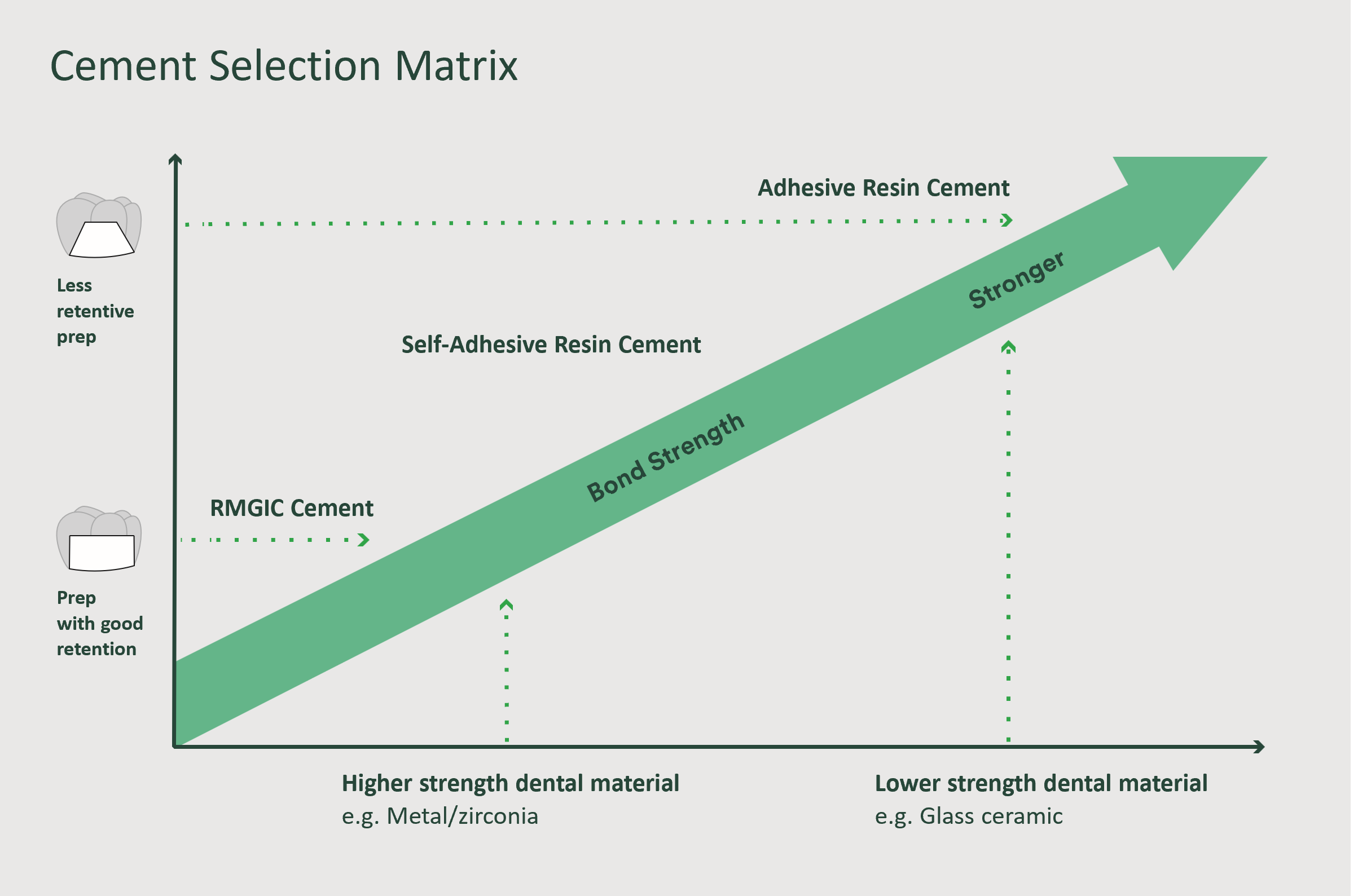
With essentially three different cement classes at hand, it is necessary to select the most suitable solution for the restorative material in use, the preparation design and the moisture control options. Due to their low bond strength, easy-to-use and moisture-tolerant conventional GIC/RMGIC cements are only suited for clinical cases with a retentive preparation design and restorations made of metal or highstrength ceramics. Resin cements paired with a separate adhesive, on the other hand, provide the highest possible bond strength, but there is a workflow tradeoff: they require a multiple step procedure and a dry working field. Consequently, they are recommended for the most demanding cases with low-strength restorative materials and non-retentive designs – but only if moisture control is possible.
The fast-growing self-adhesive resin cement category provides a happy medium, combining both ease of use and reliable bond strength. These products are highly versatile and used for a wide range of indications. In the worst-case scenario, making the wrong cement choice can likely lead to insufficient bond strength and ultimately restoration failure.
If the restorative material is strong enough and the preparation is retentive, self-adhesive resin cements are the preferred choice due to their balanced properties.
 The great news is that you now have the choice of an additional cement category
– the ‘Universal cement’ and you can now simplify your workflow with 3M™ RelyX™ Universal Resin Cement. In combination with 3M™ Scotchbond™ Universal Plus Adhesive, it’s an adhesive resin cement offering the highest bond strength; and can be used as a standalone cement in self-adhesive mode due to its excellent self-adhesive properties. The end result: a streamlining of your cementation protocols and reduction of your inventory.
Additional factors for consideration.
Any additional manipulation of the prepared tooth structure or restoration might affect the performance of the cement and the final restoration. Errors in a core build-up procedure could compromise the stability of the abutment tooth and the quality of the bonding surface. An improperly designed temporary might lead to inflammation of the surrounding soft tissue and any resulting swelling and bleeding. could challenge the dental practitioner during restoration placement and might negatively affect the performance of the cement. Other substances that could potentially affect the adhesive interface and bond quality include the selected fit checking materials (silicone base that will contain oils) as well as desensitisers.
Minimise exposure of cements and adhesives to ambient light or operating light
When applying dual-cure cements, timing and the potential impact of ambient light should be considered. Both factors can influence the working time (as can the temperature of the cement at the time of application). Light plays a decisive role for the adhesive as well: if stored in an open vessel for several minutes, the adhesive’s properties might change. During cement application, voids are a common issue that could compromise the quality of the bond and prevent a complete seal to the underlying tooth structure. When it comes to excess removal, common errors result from the formation of an oxygen inhibited layer or manipulation of the restoration, which might lead to lower bond quality or an incomplete positioned restoration, respectively. The latter might also be the result of an insufficient cure, whether a light-cure or dual-cure cement. Some additional tips
- Apply the cement at room temperature if possible; if not, take the shortened working time into account.
- Keep the mixing tip submerged in the material during cement application to prevent the formation of voids in the cement layer.
- Whenever possible, use the tack-cure option for excess removal.
- Do not manipulate during excess clean-up (stabilise restoration with a finger and avoid using a scaler, probe or floss until you’ve ensured the cure is complete).
- Check the intensity of the curing lights on a regular basis and adjust the curing protocols accordingly (Please Note: Solventum offers no obligation curing light testing in collaboration and under license with Bluelight Analytics using their CheckMARC testing device).