
Article by Stephen Langdon, Solventum Clinical Specialist
The first rosin based fluoride varnish was introduced way back in the 1960’s and apart from the more recent inclusion of various forms of calcium and phosphate in 2 or 3 commercially available varnish options and a change to unit dose packaging, there has been very little advancement in fluoride treatment technology for many years.
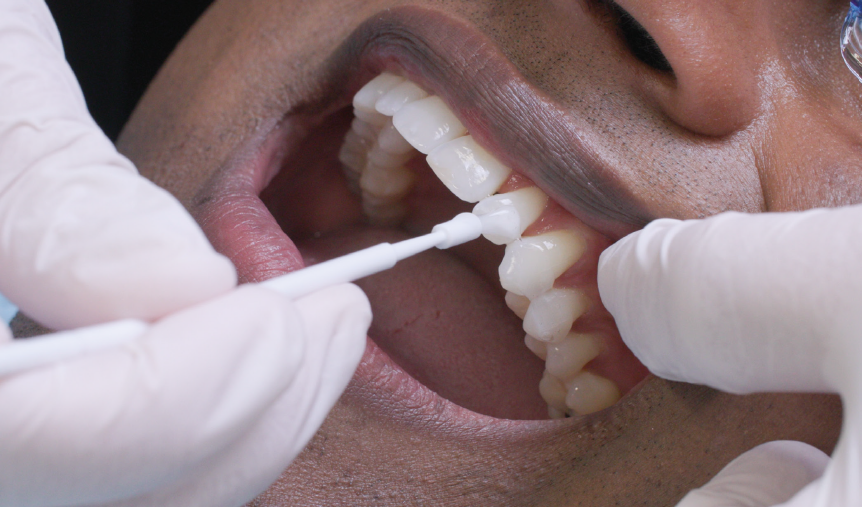
In many countries, including Australia, clinicians have been favouring the use of fluoride varnishes over fluoride gels, especially among children with developing and primary dentition. A major reason for the switch is many believe there is a reduced risk of accidental ingestion of fluoride during the onerous fluoride gel treatment; not to mention that despite the pleasing flavours of fluoride gels, patients also have to deal with uncomfortable, bulky, non patient specific foam trays for the duration of the treatment (often, up to 6 minutes) which can and has also resulted in increased patient anxiety.
BUT
Its also no secret that there is ongoing patient dissatisfaction with traditional fluoride varnish treatment amongst all age groups. Achieving patient acceptance to fluoride treatments is one hurdle, getting them to comply with post treatment instructions is another. There are obvious numerous patient pain points here that until now have been increasingly difficult to overcome.
The taste, smell, feel/product texture of fluoride varnish and the recommended contact or wait times, continue to contribute to an overall lack of treatment acceptance, but with all that in mind – Fluoride continues to be an essential part of oral hygiene, providing benefits far beyond just cavity prevention.
In your practice – do you evaluate your fluoride treatment protocol/s. What are you using? How are you educating your patients on efficacy or need for the treatment? And very importantly – how do your patients react when the product is applied and therefore – are you achieving good patient acceptance?
Did you know that basically all Fluoride varnishes (including gels/foams), except one, are TGA approved to treat dentine hypersensitivity and yet these professionally applied fluoride products are predominantly all used primarily for off-label – caries prevention. Varnishes in particular work by increasing intra-oral fluoride availability and therefore reacting with tooth structure, and if the patient complies to post treatment recommendations, they can prolong fluoride-enamel exposure better than existing gels, rinses or paste/foam formats.
This is important, of course, as fluoridated enamel is less soluble compared to fluoride-free enamel, and also functions as a reservoir to thwart the deleterious action of cariogenic microbes. Nearly all existing fluoride varnish products have a fluoride concentration of 5% (e.g: 22,600ppm F) and for that very reason there is a general assumption that these products would have improved benefits even though their ability to release fluoride and capacity to react with tooth structure is heavily reliant on contact time due to the sticky rosin based chemistry.
NOW there is a significant step forward in fluoride treatment.
A fluoride treatment that does more with less!!
At Solventum (formerly 3M), we have a long history of manufacturing rosin-based Fluoride Varnish products and so we know how they work, however, we also know that they are far from the ideal treatment option for patients based on acceptance and compliance. Just ask them!!!
After a long overdue and exhaustive consultation with Healthcare professionals and their patients we very quickly concluded that there was a strong need for further development of an alternative fluoride treatment option that offered the overall efficacy of existing rosin based varnishes but was far more patient friendly and offered significantly improved patient compliance outcomes.
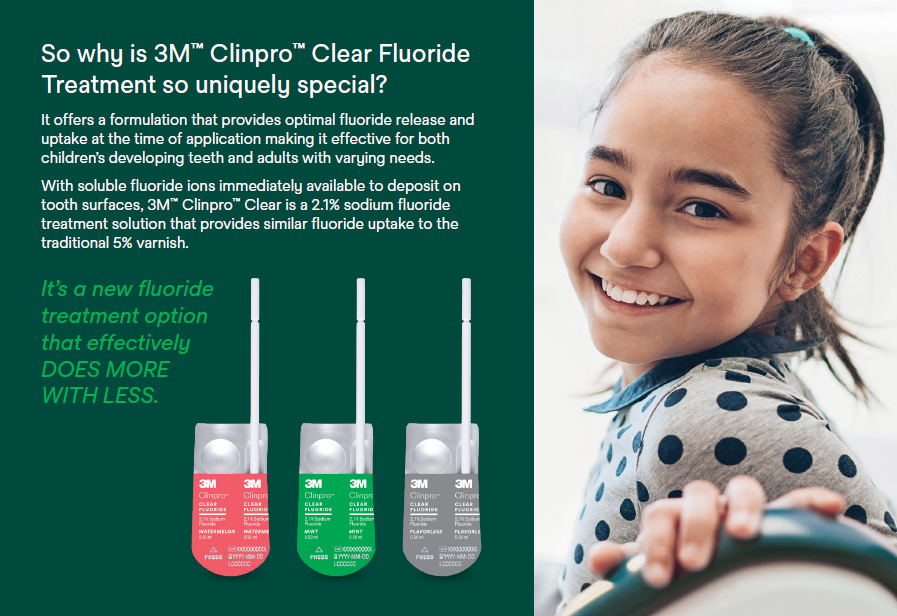
Introducing 3M™ Clinpro™ Clear Fluoride Treatment, an innovative ready release fluoride treatment technology that allows effective and efficient release of fluoride, calcium and phosphate with only a 15min contact time. Our new 3M™ Clinpro™ Clear Fluoride Treatment comprises a unique water based solution containing a stabilised calcium phosphate technology in which the minerals are already dissolved in solution. This means that fluoride ions are freely available immediately upon application. The traditional rosin-based fluoride varnishes are effectively sticky coatings (for retention) where the sodium fluoride particles are suspended in a dispersion.
Traditional varnishes
- Fluoride in higher concentration (22,600ppm)
BUT
- Most must stay in contact with the tooth surface for up to 4 hours* to allow the sodium fluoride particle to ionize.
Only then can the tooth uptake the fluoride ions
- Sodium fluoride must be dissolved from the rosin prior to full uptake by the tooth.
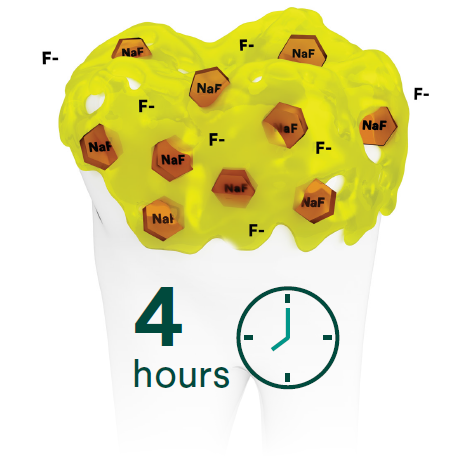
These products are heavily dependent on patient saliva to dissolve the rosin or sticky coating and to release the beneficial minerals, however, this requires a much longer contact time of up to 4hrs. 2 significant issues arise here in terms of efficacy performance of current varnishes:
- A large portion of the rosin based varnish does not get a chance to be released from this sticky hydrophobic coating before it either wears away or the patient, in many cases, flicks or removes it due to its rough and annoying texture.
- The level of compliance for patients when told not to drink or eat for a prolonged period of time is very poor. There is also a high level of misunderstanding by Healthcare professionals on the recommended contact time for rosin based fluoride varnishes. Many are of the belief that 30mins is sufficient, but, based on the slow fluoride release mechanism of traditional varnishes, a 30min contact time before fluid or food intake is in fact totally inadequate from an efficacy point of view. Needless to say that most patients have already picked away at the varnish surface anyway.
*Fernandez et al. showed that only 258 μg F/g are free and soluble fluoride with a rosin-based varnish, the rest is insoluble. That means a longer retention time (4 hours) is needed to allow NaF particles initially insoluble in the varnish matrix to release for uptake on the tooth surface. Brazilian Dental Journal (2014) 25(2): 160-164.
How does 3M™ Clinpro™ Clear work?
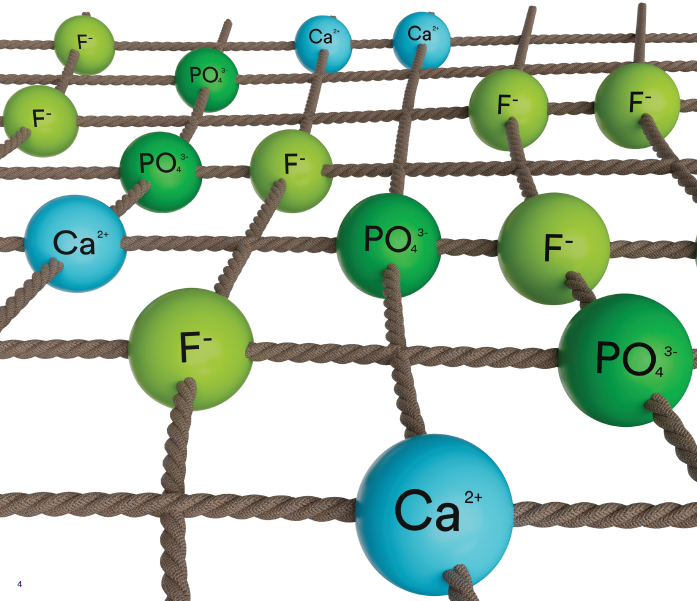
We must first protect the mineral ions. When calcium and phosphate combine with fluoride, they create fluorapatite, a stronger more acid resistant mineral. Calcium and Fluoride also have a strong, natural affinity for each other and can easily interact prematurely when in close proximity rendering the minerals useless for effective deposition on the enamel surface. With 3M™ Clinpro™ Clear we effectively stabilise the calcium and phosphate in the presence of fluoride by embedding the calcium into a cross linking polymer lattice ensuring separation in the composition until the product is applied onto teeth surfaces.
This cross linking continues to work and protect throughout the shelf life of 3M™ Clinpro™ Clear. Upon application and in contact with saliva, fluoride, calcium and phosphate are released and combine together to deposit a strong, more acid resistant mineral.
The water/saliva soluble polymer matrix is a very high molecular weight polyacrylic acid that not only provides chemical stability for the ions to prevent any premature interaction whilst in packaging, but very importantly promotes adhesion of the 3M™ Clinpro™ Clear coating to the tooth surfaces.
This unique combination of water, polymer and buffered ion solution allows an equivalent or better protective effect compared to traditional rosin based varnishes even though 3M™ Clinpro™ Clear contains a smaller dose of fluoride – 9,500ppm vs 22,600ppm.
3M™ Clinpro™ Clear Fluoride Treatment
- Fluoride in lower concentration (9,500ppm)
AND
- The soluble fluoride ions are immediately available to uptake onto the tooth surface, with a treatment taking only 15 minutes
- Fluoride ions are soluble and ready to release
With 3M™ Clinpro™ Clear there is NO mixing required
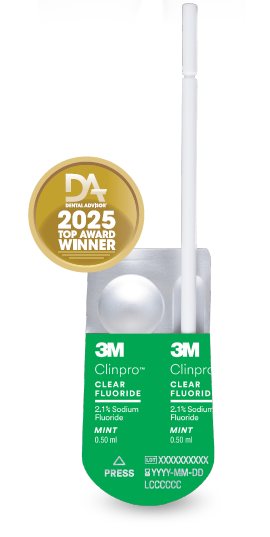
All traditional rosin-based varnishes suffer from “phase separation”. That is why they must be mixed to dispense heterogeneous parts whether they be packaged in a tube or supplied in unit dose.
3M™ Clinpro™ Clear Fluoride Treatment:
- Homogenous, water-based solution means no mixing is needed
- It goes on clear and stays that way
Migration of 3M™ Clinpro™ Clear
The migration potential of an in-office fluoride treatment is very relevant in terms of overall efficacy. Rosin based varnishes set quickly when in contact with saliva and also due to solvent evaporation. This can effectively limit their ability to spread within the oral cavity to all teeth surfaces, especially when it is also dependent on contact time and patient compliance.
With the water based polymer technology of 3M™ Clinpro™ Clear, it does not set in the presence of saliva nor does it contain any solvents that evaporate and harden the product onto tooth surfaces. Instead the water based technology of 3M™ Clinpro™ Clear and its thixotropic (shear thinning) behaviour provides for an easy swipe-on application technique. This allows the product to easily migrate or very effectively spread to additional interproximal surfaces.
3M™ Clinpro™ Clear DOES adhere to tooth surfaces
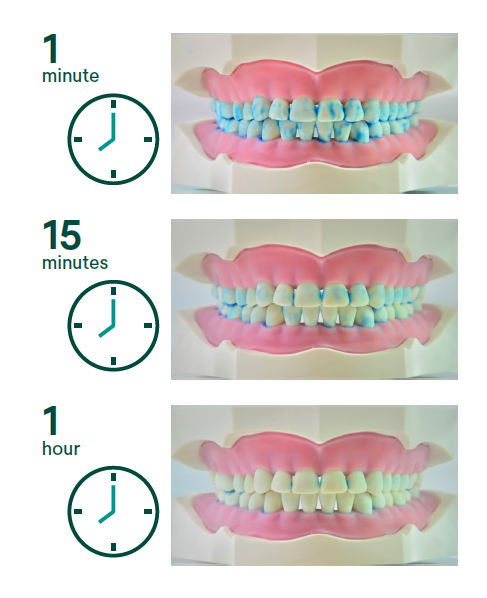
The water/saliva soluble polymer of 3M™ Clinpro™ Clear Fluoride Treatment is composed of hydroxyethyl cellulose combined with polyacrylic acid providing chemical stability (ensures prevention of any premature interactions of the beneficial mineral ions within the packaging) and adhesion of the coating to teeth surfaces. In a laboratory experiment, 3M™ Clinpro™ Clear was tinted with blue dye to aid with visualisation.
A typodont was painted with the tinted 3M™ Clinpro™ Clear and then submerged in water, placed in a vibrating incubator and oscillated at 60 rpm. At intervals of 1 minute, 15 minutes and up to one hour after placement, the coating remains and can be seen on the teeth.
The difference IS soluble fluoride!
In a recently published in-vitro study, “Enamel Fluoride Reactivity of Professional Fluoride Products Is Not Correlated With Their Total Fluoride Content”, Paediatric Dentistry V47/No.3. May/June 2025: by Associate Professor Livia Tenuta DDS, MSc, PhD out of Michigan School of Dentistry
- The objective was to determine the correlation of total and soluble fluoride of a new fluoride treatment (3M™ Clinpro™ Clear Fluoride Treatment) in comparison to existing commercially available
- varnishes.
- Total fluoride and soluble fluoride were extracted. After extraction, the fluoride was dissolved in 100% ethanol and diluted in deionised water. The fluoride concentration was determined using a fluoride specific electrode.
- Results showed that 3M™ Clinpro™ Clear measured a total fluoride concentration of 9,500ug F/g vs a total fluoride concentration of 22,600ug F/g for all the other varnish products. And this comes as no surprise and would be expected
- But when the total “soluble” fluoride was measured, this tells a very different story. Results showed that 100% of the total fluoride concentration in 3M™ Clinpro™ Clear is soluble.
- For the other rosin based varnishes, measured “soluble” fluoride concentrations ranged from 0.2% up to 7.1% only.
Outstanding Clinical study results for 3M™ Clinpro™ Clear
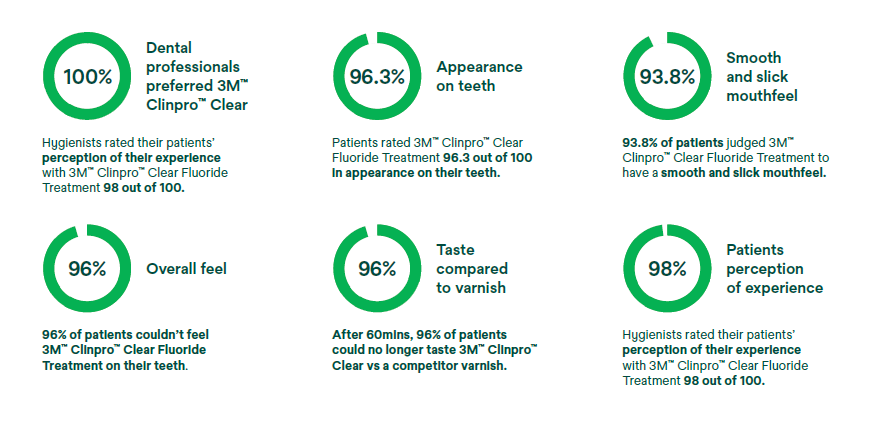
In a clinical study that included 48 patient subjects and 24 Healthcare professionals to evaluate 3 fluoride treatment products, 1 x Fluoride Varnish, 1 x Fluoride Gel and 3M™ Clinpro™ Clear, the results for 3M™ Clinpro™ Clear were outstanding. Ease of application, time to apply and the patients experience all rated very high by all participants.

Stephen Langdon
Solventum Clinical Specialist, Dental – ANZ
Stephen has over 40 years experience in the dental industry, initially as a Dental Technician, then transitioning into retail sales before moving across to manufacturing in 1986 as an ANZ Area Manager with former ESPE GMBH based out of Seefeld/Germany.
In 1990, he took over responsibility as Business Technical Manager for ESPE Australia P/L. In 2000 the worldwide acquisition of ESPE by 3M resulted in a role change to
Scientific Affairs Manager for the
3M Oral Care Division. In early 2020, he moved to a Clinical Specialist role.
He has developed technical expertise across a broad range of 3M Dental product and equipment categories and has presented on numerous occasions in ANZ as well as internationally on various product and technique related subjects.